SCIFIHISTORY.NET
  • MAINPAGE
  • About
  • Reviews

Stardate 09.19.2022.C: A Terrible Duo Nearly Spoils The Start - A Review Of Night Gallery's S01E01 'The Dead Man/The Housekeeper'

9/19/2022

0 Comments

 
Picture
​Regular readers to SciFiHistory.Net know that I will rarely – if ever – truly complain about a movie or an episode of anything.  A particular story may not be to my liking, but I’ve no fervent desire to ‘trash’ anything, nor insist that it has nothing of merit to other viewers.  My rating systems (99% of the time) ranges from Highest Recommendation Possible down to the paltry Not Really Recommended, which I give out after an awful lot of personal reflection.  I just try to find something – some nugget of joy – to seize and hold on to in any project, and that usually helps me rise to the occasion both critically and professionally.
 
Erm …
 
That said, I really (really really) had a difficult time with “The Dead Man” but only for some very specific reasons.
 
As I said in my review of the Night Gallery telefilm (found here), that 3-part feature was a pretty solid set-up for a series to follow, though I found the installments dipping in quality from the start to the finish.  Even though I had some quips and quarrels here and there with each chapter, I’d still argue that it was a stupendous (if only occasionally predictable) launch for a new incarnation of what Rod Serling did so well with The Twilight Zone … but – as always – buyer beware.
 
However, if you remove that telefilm from the equation and instead imagine “The Dead Man” as a first fully realized episode, then I’d not have a lot of faith in the longevity of any potential series.  In fact, I wouldn’t be all that likely to tune in next week, as they say.
 
The screenplay shows adapted (presumably by Serling) from a story by Fritz Leiber, Jr., a name I recognize but cannot presently place (nor has any immediate research helped).  A quick review of his profile on Wikipedia.org certainly suggests that the man was somewhat prolific – having penned stories in Fantasy, Horror, and Science Fiction – and he’s even attributed as being one of the ‘forefathers’ to swords and sorcery stories.  But “The Dead Man” as presented feels very much like it could’ve damn near been lifted from the pages of any 1950’s or 1960’s era Horror-themed comic book.  There were several popular imprints – Horror Comics, Eerie Comics, Tales From The Crypt, etc. – and I’ve read a handful of them in my spare time.  While they were good and typically quick reads, they also are very dated to the period, meaning that they don’t lend themselves very well to modernization.
 
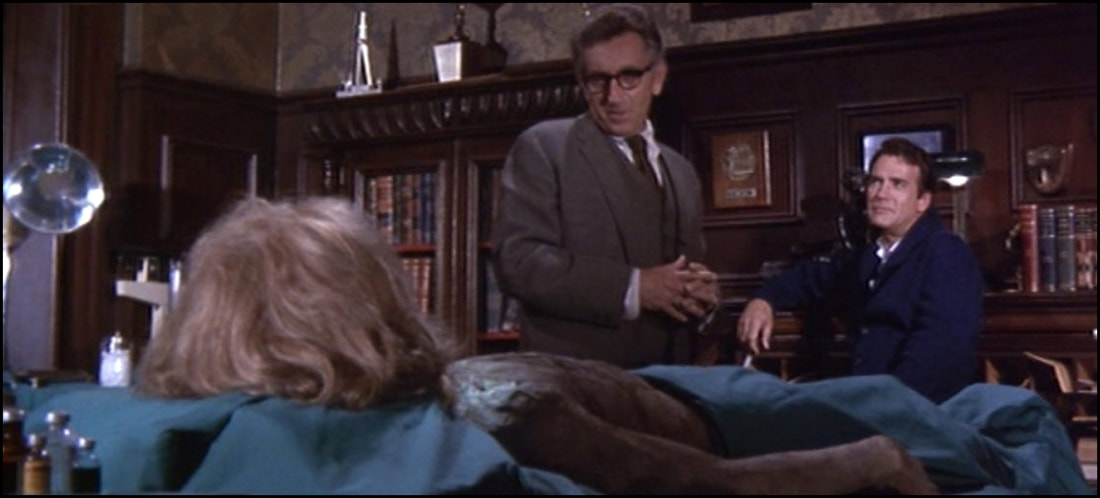
That’s exactly the rub with “The Dead Man.”  Jeff Corey plays Dr. Miles Talmadge, a professional summoned to his collaborator’s home – Carl Betz as Dr. Max Redford – to witness what he’s kinda/sorta led to believe is a medical miracle.  Once inside, he’s asked to examine what appears to be the body of John Michael Fearing (played by actor Michael Blodgett) and diagnose his cause of death or pronounced illness.  However, as Talmadge achieves one diagnosis, there’s a sudden change to Fearing’s symptoms, leading him to deduce a different illness.  All of this happens until Redford awakens Fearing from his somewhat sleeping state, and we learn that the young man is capable of changing his appearance simply by post hypnotic suggestion … oh, and a series of knocks done by Redford off-camera.
 
This presents a quandary about which the two physicians engage in a series of debates, making the plot points of this “Dead Man” all choreographed in dialogue instead of organic plot developments.  We’re told the story, and we’re eventually led to understand that a fateful mistake – Redford’s own psychological shortcomings – cause Fearing’s accidental death … or do they?  Before you know it, we’re off to another round of – ahem – conversations which suggest the good-looking young man might not be dead, at which point the drama goes full melodrama in a bid to see him unearthed from his crypt by the woman who loves him.  As you can guess, she “raises” him from the dead with the proper post-hypnotic signal … and you can probably figure out what happens next.
 
Sigh.
 
Again, if storytellers have to literally tell me a story, then there’s far too much exposition for any of it to feel authentic.  That’s the biggest stumbling block to “Dead Man:” not a bit of it escapes artificial construction, meaning that we’ll all feel better after this commercial break anyway … so what’s all the fuss about?
​
Picture
Sadly, the second half of the two-part season opener – “The Housekeeper” – is an equally uninspired yarn, though it does provoke a few good chuckles at the expense of some fairly stereotypical creations.
 
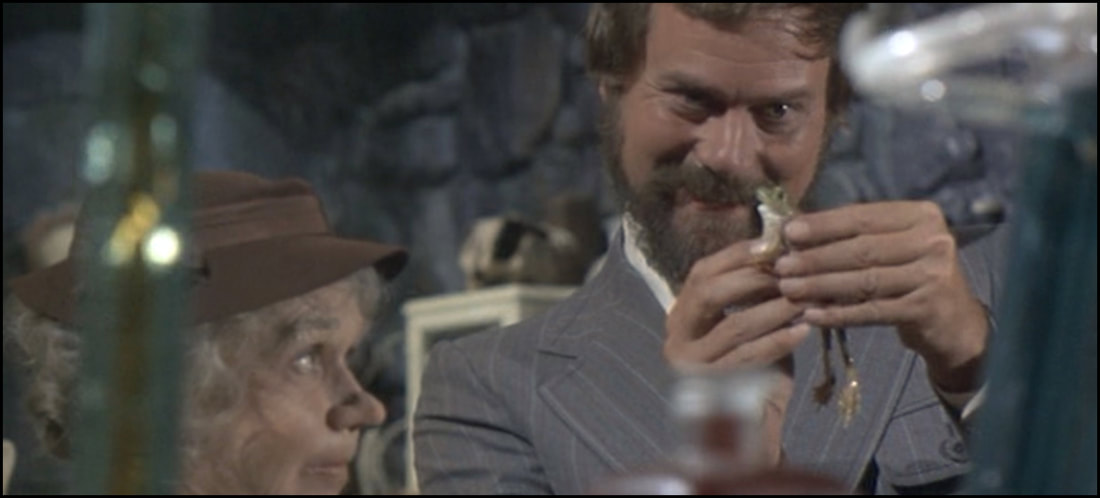
Miss Wattle (played by Jeanette Nolan) is an aging spinster who’s still needing to work as a household maid to make end meet end.  In the opening segment, she’s called to her work agency and attached to an opening specifically because the client has requested – ahem – someone old, someone ‘ugly,’ and someone with no other prospects in life.  Granted, such a job description would likely result in a bevy of lawsuits today, but this was the 1970’s.  And it was TV!  So it’s perfectly acceptable!  Rude, yes.  But acceptable.
 
Because she’s perfectly fit for the task, Miss Wattle is dispatched where she meets the somewhat studious Cedric Acton (Larry Hagman), who reminds the older woman over and over again of just how perfect she is for his preferred qualifications.  As the story develops, his true mission slowly comes to light: it would seem that Acton’s wife, Carlotta (Suzy Parker), is actually not only the source of Cedric’s wealth but also all the troubles in his world!  He’s tapped into a kind of black magic apparently and wishes to use it to replace her consciousness with that of an eternally grateful Miss Wattle … only the dear old maid turns out to have designs all of her own once the deed is performed.
 
As I said above, viewers need to put aside some of the cultural issues with “The Housekeeper.”  While made in the 60’s/70’s, it definitely feels as though it was originally written much earlier.  (Unfortunately, IMDB.com’s citation is a bit unclear.)  There are some very obvious stereotypes of simpler times that won’t sit well with today’s audience; but if you can look past that there’s a perfectly charming (but paper thin) loose romantic comedy in there.  Granted, it doesn’t quite work out the way any of these characters intended, but that’s Serling’s narrative gift: he likes upending expectations in the last reel, and that he does here.
 
Though imperfect (and obvious dated), neither half of this first episode truly represented the best TV had to offer both in and out of Serling’s capable hands.  As this is my first foray into the world of Night Gallery, I’m hoping and praying that things start to look up with Episode Two … or I’m going to have miles and miles to go before I sleep …

​-- EZ
0 Comments

Stardate 09.19.2022.B: Night Gallery's Pilot Telefilm Offers Up A Trifecta Of Diminishing Returns (S01E00)

9/19/2022

0 Comments

 
Picture
To be perfectly honest, I wasn’t allowed to watch Rod Serling’s Night Gallery in its original airing on U.S. television.
 
Simply put, I would’ve been too young for the subject matter.  Though I think I could’ve probably grasped the idea of what’s going on, it was a program that my parents understandably kept from me.  Besides, back then, I don’t recall our television time being as limited as perhaps parents do today (not speaking from experience, mind you); there just wasn’t a lot on in prime time that would’ve interested the youngest among us.
 
And because the show has often been saddled with a reputation of being merely ‘Rod Serling’s other foray,’ I think it was one that never quite had the opportunity to grow (as did other cult shows) in TV syndication.  As a consequence, it just never quite fell onto my radar, though I’m glad to see that it’s now getting a modern era makeover with the latest home video release from Kino Lorber.
 
Alas, I’d not been able to secure on via the usual distributor relationships, so I saved my pennies and recently picked up the show’s first season on home video all by my lonesome.  Having just unwrapped its pilot telefilm, I thought I’d make a few observations for folks who watch this space and might be interested in the dark pursuits.
 
(NOTE: The following review will contain minor spoilers necessary solely for the discussion of plot and/or characters.  If you’re the type of reader who prefers a review entirely spoiler-free, then I’d encourage you to skip down to the last few paragraphs for my final assessment.  If, however, you’re accepting of a few modest hints at ‘things to come,’ then read on …)
 
From the series’ IMDB.com citation:
“Rod Serling presents tales of Horror illustrated in various paintings.”
 
For those unaware, Night Gallery was a late 1960’s / early 1970’s anthology that, largely, sprang from the mind of Rod Serling, the same TV genius who so lovingly crafted The Twilight Zone, which even today remains one of the benchmarks of quality programming.  For any number of reasons, the show never achieved anywhere near the level of popularity as Serling’s predecessor, but it certainly follows the same narrative structure – present a wildly speculative ‘what if’ scenario and cast some reputable guest stars to enjoy the ride – with a bit of a ‘surprise twist’ tied to the last moments.  Granted, the stories may not all work out this way, although I suspect most of them will adhere to that structure in some way, shape, or form.
 
Much like the Zone, Serling served as a narrator, one who would come out, spin some prescient wisdom, and then let the stories unfold as they would.  His segments arguably helped direct the audience to what was really important about the forthcoming yarn, and no matter the subject matter or the context you could rest assured that if anyone knew what he was talking about it would be Rod.  When he spoke, you paid attention … and you’d shortly learn what fools these characters were for not following suit.
 
The show was initially introduced via a 90+ minute telefilm.  Internally, this flick was broken up into (roughly) three 40-minute segments, each morality play with their own respective cast and crew.  Some big names of the era made guest appearances on the show, and why wouldn’t they?  Anyone who was anyone in Hollywood knew Serling’s credentials, and I suspect they were all happy to play – even if briefly – in this dark and twisted universe.
​
Picture
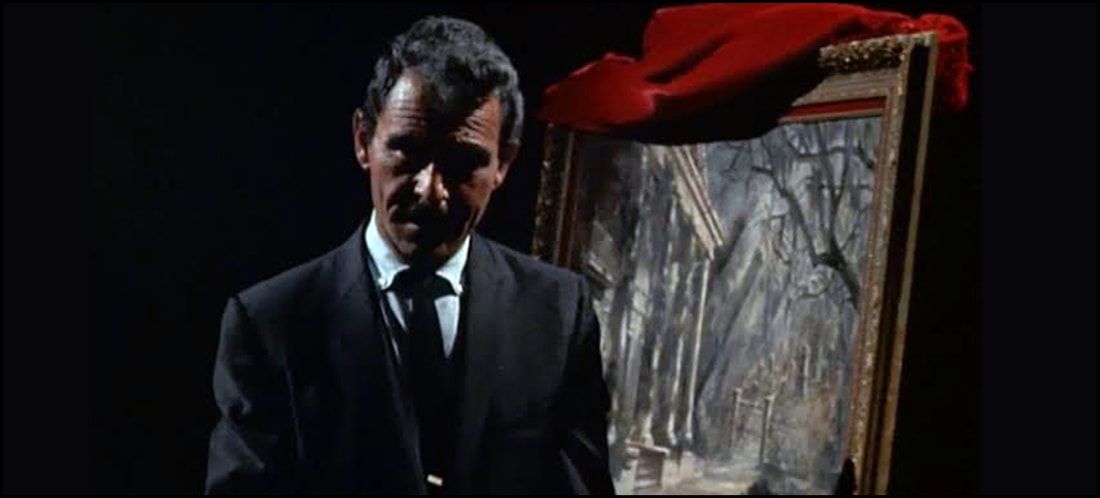
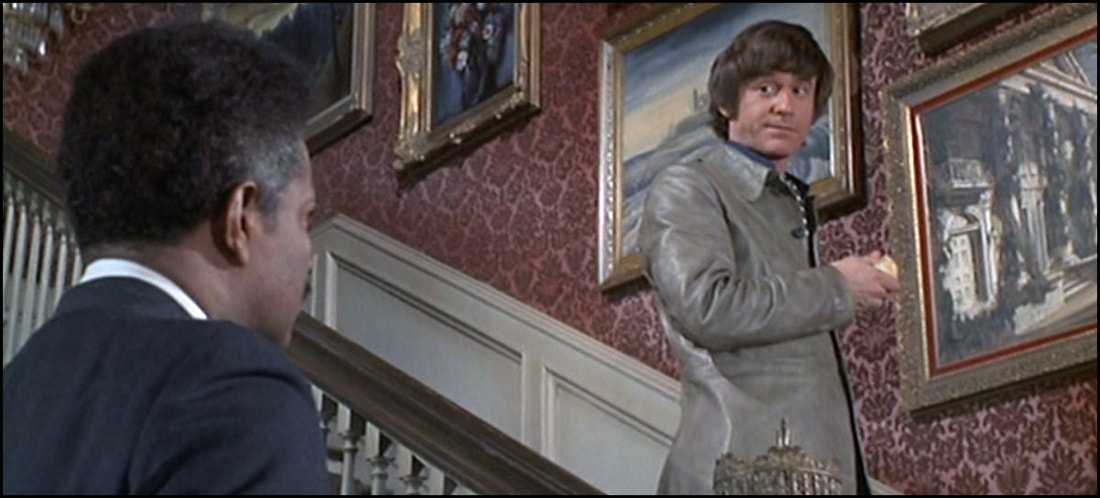
The first segment was titled “The Cemetery,” and here’s its description as provided by IMDB.com:
“A seemingly haunted painting drives a greedy man insane.”
 
Right out of the gate, Night Gallery kinda/sorta demonstrates the danger of its conception: this is exactly the kind of thing Rod Serling had done before.
 
Perhaps having achieved so many high marks with The Twilight Zone, the creator may’ve found himself painted a bit into a corner as “The Cemetery” gets planted firmly in the ground that he’d vastly already mined.  Serling’s prose here is quite good as it applies to the characters – Ossie Davis captures the perfunctory butler to an aging and decrepit recluse to great effect, and Roddy McDowall had long ago perfected such free-swinging swindlers.  The screenwriter gives them more than enough small moments to clearly establish their respective circumstances, and it’s quite clear in the early moments that these two couldn’t be at greater odds with one another if they tried.
 
If anything, McDowall (as Jeremy Evans) might be a bit long in the tooth here.  Serling kinda/sorta crafts the ‘black sheep’ to be a bit younger than what the actor is, but it’s easy to dismiss that grievance when the actor turns in such great work.  There’s never any doubt that he’s shown up on the scene to bilk his dying dad out of his fortune, and that’s precisely how the plot progresses.
 
What we may not have expected?
 
Well, it would appear that dear old dad’s paintings have taken on a life of their own: Jeremy begins to detect very small, very subtle changes in them; and these alterations imply that the patriarch might very well have opted to haunt not only his own house but to seek out vengeance against those who have wronged him in his time on Earth, meaning that our guest actor had best not turn his back on things that go bump in the night.
 
Still, it’s a set of circumstances that debatably ends up playing out likely as audiences could predict knowing Serling’s penchant for surprise endings.  What “The Cemetery” does (to some small effect) is it taps on yet another zinger – one I won’t spoil despite the fact that traditional spoiler rules have long since passed – directed at another culprit, one that maybe viewers weren’t expecting.  While it’s a solid first outing in this all-new universe, I hardly think it delivered the level of amazement all involved intended. 
​
Picture
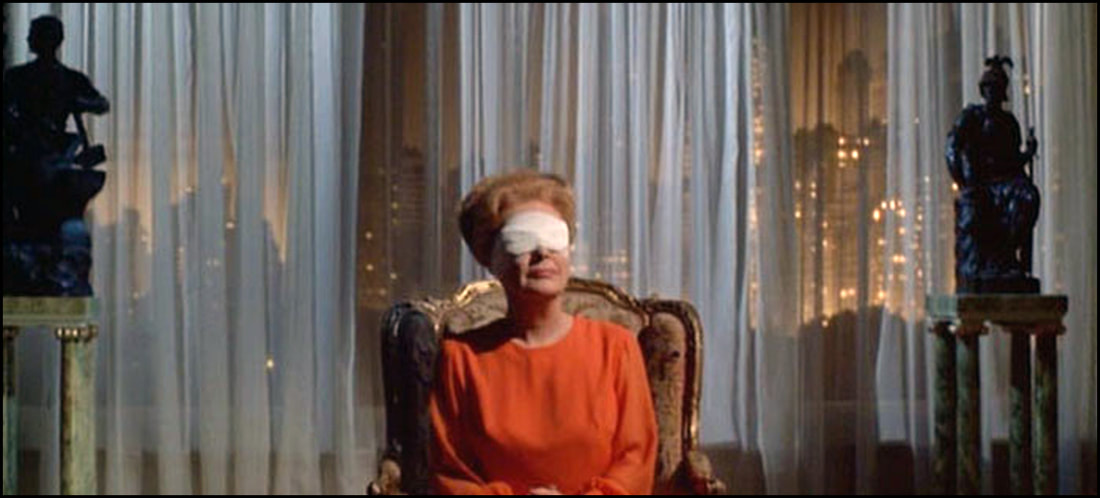
From the episode’s IMDB.com citation:
“A rich blind woman gets a new pair of eyes that allow her to see for only one brief ironic moment.”
 
Again, today’s password is: irony.
 
The telefilm’s second installment – one simply titled “Eyes” – has a measure of TV distinction that bears mentioning: it was directed by none other than Steve Spielberg … and, might I say, he did a pretty impressive job with only 40 minutes?  Spielberg peppers this impressive yarn with some solid visual trickery, making great use of the set décor, his talents’ positioning, and several sequences of near darkness.  It’s an inspired take – one that easily rises above the first story – and rather compelling takes the audience aesthetically somewhere Serling’s The Twilight Zone hadn’t quite gone before.
 
Here, Serling’s script is also a vast improvement over the opening: he’s rather delicately fleshed out two main players – Barry Sullivan as Dr. Frank Heatherton and screen legend Joan Crawford as Claudia Menlo.  What he deftly reveals is that neither of these players is perfect, but the one who’ll likely emerge on top is the one who’s willing to play dirtiest of them all.  With a name like ‘Menlo’ (i.e. men are low, meaning subservient), Claudia easily bests the good doctor, but in customary Serling fashion Heatherton might get the last word after all.
 
But “Eyes” is a riveting installment of television because Spielberg went to some great lengths to make it something worth looking at deeply.  As I said, there are staging marks that underscore character traits; and then – as a director – he’s constantly reminding us precisely of what Claudia has missed her whole life, that being the sense of sight.  Naturally, we’re a bit aghast to learn just how far she’s willing to go even if it awards her a mere few hours to see things all of her own – just as is Dr. Heatherton – and that’s why I suggest you keep in mind that irony is the key here.  Though it’s been said before, Claudia truly confronts the “be careful what you wish for” moral of the story in the segment’s final moments.
 
Kudos to Serling and Spielberg for achieving such an incredible tale so very early in Night’s life.

Picture
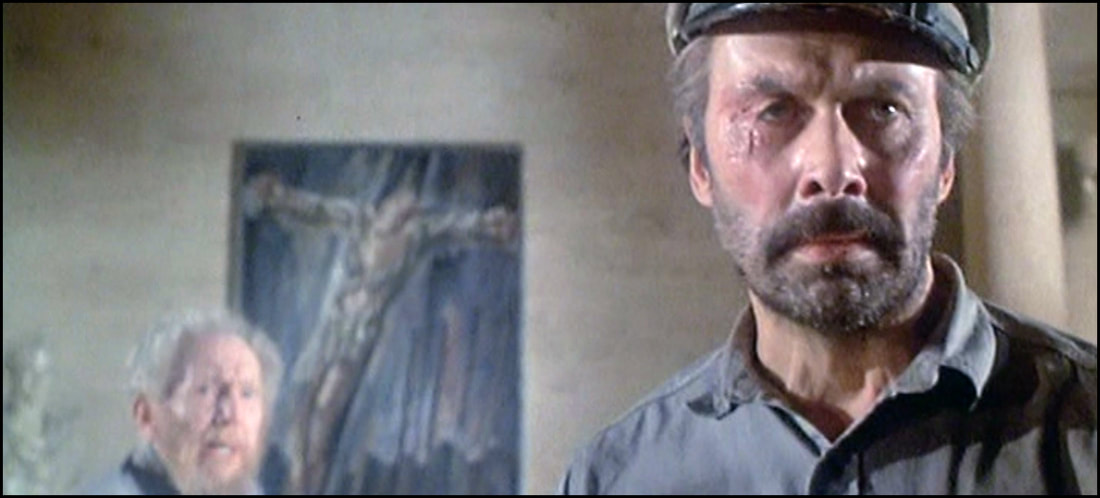
Alas, not all that is green is good, and Night Gallery’s final saga I found a bit underwhelming … but first, the premise as provided by IMDB.com:
“An idyllic painting gives a Nazi war criminal in hiding some fleeting comfort.”
 
As I’ve often opined in this space: usually what keeps me from enjoying any story more than the next person is that – for whatever reason – the yarn’s internal logic fails me.  Of course, this could be the end result of my overthinking either a sequence or suggestion, but if I can’t quite grasp ‘the big why’ of a character’s motivation then I end up reeling a bit with the journey I take with him or her.
 
Such is the case with “Escape Route,” a minor potboiler that stems from a good idea but really stops short of making sense.
 
In case you’ve missed your history, it’s not impossible to suggest that there are countries in South America who secretly played host to some Nazi officers who managed to both escape the end of World War II and any other detection for several years in their chosen exile.  That’s essentially what Serling’s tale is here: actor Richard Kiley plays former SS-Gruppenfuhrer Helmut Arndt hiding out under the name of Josef Strobe.  One day, his growing paranoia over being followed by possible Israeli agents has him ducking into a museum, and the former torturer finds himself – for reasons never satisfactorily explained to this viewer – drawn to the painting of a faceless fisherman in a rowboat.
 
Now I hate to be found guilty yet again of overthinking a 40-minute episode, but why?  Why was Strobe particularly drawn to this painting?  Did it remind him of the simpler days of his youth?  Did it represent something so unmistakably tranquil that he couldn’t imagine living in any other place or circumstance?  Or perhaps – like Hitler himself was – did Strobe secretly harbor a wish to have been a famed painter?  While viewers might watch the segment and achieve their own measure of appreciation for the German’s fixation, I honestly just couldn’t ‘get’ it.  Yes, yes, yes: I know full well that he had grown somewhat weary of feeling like he was always ‘on the run,’ but as we were never adequately shown or suggested such a fate for the man I just didn’t quite buy that.
​
However, I think director Barry Shear rather impeccably staged one fascinating element of Serling’s script here: there’s a protracted sequence wherein Strobe shares a conversation through his hotel room wall with a neighboring prostitute, Gretchen (played by actress Norma Crane).  It’s rather brilliant set-up – both of their backs pressed to their respective walls – and the duality of who these two people are – both serving to make others happy yet being denied their own measure of happiness – is stunningly captured on film.  You may watch it and make less of it, but I thought it just vividly rendered.
 
Otherwise, I’d have to grade “Escape Route” as the weakest link in an otherwise interesting launch to Night Gallery.

​-- EZ
0 Comments

Stardate 09.19.2022.A: Because You Asked - I'd Rather Watch Something Older

9/19/2022

0 Comments

 
Picture
Good morning ... and Happy Monday, gentle readers!  Welcome to the start of a brand new week, and here's hoping you're getting off on the right foot today!

Now ...

Today's 'Because You Asked' is a little bit of what I call behind-the-scenes baseball.  It comes from a young(ish) reader who was introduced to the site a few years ago (believe it or not!) from a friend whose teacher used to read an occasional trivia blurb from the site, a little something-something to kinda get his students talking about films.  I won't put the question up directly -- I never do that -- but I'll paraphrase the focus: this reader wants to know why I spend so much time talking about older films and less emphasis on the newer ones.  It's a great question -- one I get, honestly, fairly regularly -- though not in the same format.  For example, I might get a question like "Hey, where is your She-Hulk coverage at?"  I'll reply, saying that I'm not watching She-Hulk, so why would I give it coverage?  Things like that.

But, yes, since you noticed, I do spend a lot of time talking about older films.  That's very true.

The simplest answer is that, frankly, I enjoy older films more than I do today's releases.  This isn't to say that older films are necessarily 'better,' but it is to acknowledge that -- for several reasons that relate to how stories are told -- I tend to fit in better with an older sensibility much better than I do today.  Modern Science Fiction films are heavy -- heavy -- in the effects department -- with gobs and gobs of CGI -- and I'm not a huge fan of it.  I understand why it's used so much; but I'd also argue that it's overused or -- even worse -- used poorly, and this ends up distracting me from enjoying the picture.

Also, if the latest and greatest releases playing either on the Boob Tube or at your corner cinema is what you're interested in, there are literally hundreds upon hundreds upon hundreds of blogs that already cover those.  When you're a writer -- and you're trying to build both your own voice as well as your own audience -- it's hard to fit in when you're competing against so damn many others doing what you do.  While I might go out and see the latest SciFi flick and I might even do a review of it on my MainPage, these pieces I don't as heavily promote as I do my analysis of older features.  Again, it's hard to compete against a reviewer who has thousands of followers as well as a popular YouTube.com channel, so I leave that stuff to them.  They do it very very well, and I'd likely not have as much to add to that subject as they do.  So why compete?  Also, why settle for being second, third, or fourth place?  It just seems a bit self-defeating to this old brain.

Furthermore, I think my focus on evaluating films is a bit different from most.

As I've always said, I strive to find something of value to say about a motion picture.  Understanding that there can be an awful lot of garbage said about a film, I like knowing that I've taken a bit of time, put a bit of extra analysis in, and reached an assessment that has value to myself and my readers.  If watching an episode of a popular current TV show doesn't inspire me right away, I might mull it over for a day or two before penning a review.  Were I working for a major media outlet, I wouldn't be allowed that kind of time to reflect upon the specifics.  Achieving something of substance may not be an instant process: when I have, I go with it.  If I haven't, then I don't want to waste your time ... much less my time in struggling to come up with something to say.

Lastly, this is the same kind of thinking I apply to smaller films.  These may be releases that don't get all of the major publicity that the big stars demand, and these independent features do tend to both say something worth hearing, offer good performances, and establish a narrative or story worth investigating.  Just because these storytellers couldn't spend as much as Martin Scorsese or Steven Spielberg doesn't mean they're inferior in any way; they just have to find more affordable solutions to resolve their production challenges ... and I tend to find those efforts more interesting.

For example -- and I use this a lot -- Robert Downey Jr. and Jon Favreau were famous for saying whenever they came up to some production kerfuffle in making the Iron Man films: "Don't worry about it; we'll fix it in post-production."  They could say this because they have major bucks to spend along with an awful lot of expensive special effects to correct any errors they may have captured in making their story.  Smaller productions?  They don't have this luxury, meaning that they have to get it as close to perfect the first time.  If they don't, then they have to figure out a way to use what they did capture ... and it's these folks I have a great deal of respect for.  Their love of making something in the moment overrides the demands for money ... and that's how many of us out here in back-breaking reality live our everyday lives.  We can't simply spend someone else's money to fix it later ... so we work a bit harder today.

So you see, sure, I may have something to say about each and every SciFi and Fantasy and Horror release that comes out in theaters right now ... but those films are being covered every damn day somewhere else ... so I'll eventually get around to my thoughts on them.  In the meantime?

Meh.

I'd rather watch something older.

​-- EZ
0 Comments

Stardate 09.17.2022.A: In Memoriam - Henry Silva

9/17/2022

0 Comments

 
Picture
Over the years, I've read a fair amount of commentary about issues of typecasting.

Essentially, there's been an argument made that Hollywood has historically exercised very little caution in selecting persons of a certain -- erm -- "type" to cast as the villain.  While some critics have diagnosed an undercurrent of racism in these casting decisions, I've often seen these choices as employing a certain mystique that, quite frankly, may not emanate from talent of certain backgrounds and ethnicity.  Yes, yes, yes: I realize at one level that might just be the point these academics are getting to, but I'm only trying to suggest -- as politely as I can -- that certain features lend themselves to perceived villainy.  It has nothing directly to do with skin color so much as it does the cut of a man's jaw, the intensity of the actor's glare, and the construction of his potential look on camera.  Again -- categorically -- it has nothing (for me, at least) to do with skin color; some faces just happen to 'snarl' better than others.

While this might make me unpopular with some folks, I think there was a time in Tinseltown that Henry Silva captured that look.  Yes, yes, and yes: I've seen his work in some softer roles.  He was quite good -- proving that the man could easily transcend any studio's tendency to showcase him only in certain roles -- but he always retained a toughness in everything I remember him starring in.  He wasn't any pushover.  He wasn't any lackey.  If and when the story needed something done, then movers and shakers like Silva were perfectly cast.

Naturally, I understand and appreciate the position of those who claim he was a talent shoehorned into specific roles.  I'm not arguing otherwise ... but I'm also man enough to point out that whenever given the chance Silva was damn good at playing the villain.  While he could impose a measure of menace whenever called upon, I'd also suggest those eyes could convey more than just conventional evil.  There was always something going on in those eyes.  His wheels were always turning.  While he could chew scenery with the best of them, he'd also elevate the heavy to the point of being dimensional ... and that's not something every actor could achieve.

While some might argue his genre credentials were light ... well, I'm just getting started.

1962's The Manchurian Candidate isn't a what I'd suggest is renowned as a Science Fiction project, and yet there's no mistaking the fact that the premise of both hypnosis and mind control fall smack dap into the middle of such favored territory.  For folks who might not have seen it, please do yourself a favor.  It's a masterful film directed by John Frankenheimer -- one I discovered way back in my college days -- and it's the kind of thing I'll watch whenever I find it on the TV dial.  It offers great performances across the board -- some of them might be a bit simply by today's standards -- and Silva has a fabulous presence in it, even with his slim screen time.

​Of course, that isn't his only contribution.

He made two appearances to television's The Outer Limits -- one in 1963 and again in 1964 in different roles -- and paid a visit to the popular Voyage To The Bottom Of The Sea, a franchise that hosted guest roles to many of the man's contemporaries.  He also stopped by for a guest role in 1966's Tarzan TV serial.  In 1969, he even enjoyed a guest stint on Mission: Impossible.  It wasn't until 1978 that he truly found Science Fiction with a visit to the SciFi/Comedy series Quark.

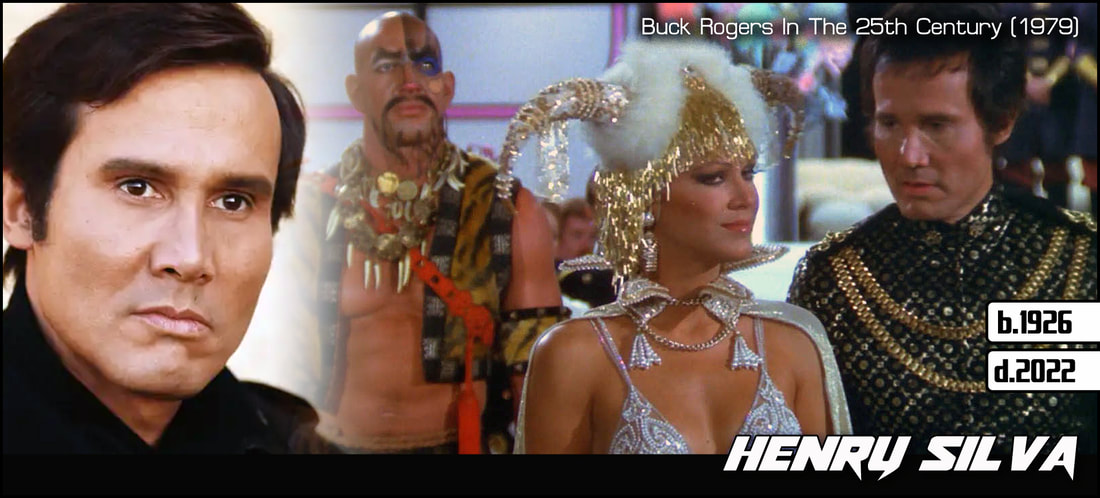
Perhaps his biggest contribution in all of SciFi, however, was and will remain his work as the infamous 'Killer Kane,' advisor to none other than the villainous 'Princess Ardala' aboard the motion picture and series pilot for Buck Rogers In The 25th Century.  Honestly, I've never read why he didn't reprise the role on the show -- Kane did come back for a few episodes; at this point, I can only imagine that he wanted to focus on his film work and opted for meatier prospects.

Still, I'd be remiss in my duties if I failed to mention that he voiced the character of 'Bane' for a few incarnations of Batman cartoons.  I've been a fan of the Batworld for all of my life, and I can't imagine anyone other than Henry Silva having the gumption to play a seminal creation that -- in the comic books, at least -- is the villain who finally broke The Bat.  How fitting.

There were a few more genre projects that followed, but it appears he retired from the business in 2001.

Alas, word reached my desk this morning that he's left us for other celestial pursuits.

Thoughts and prayers are extended to the friends, family, and fans of Mr. Silva.

​-- EZ
0 Comments

Stardate 09.16.2022.A: Happy Birthday - 1994's 'Timecop' Turns 28 Years Young Today!

9/16/2022

0 Comments

 
Picture
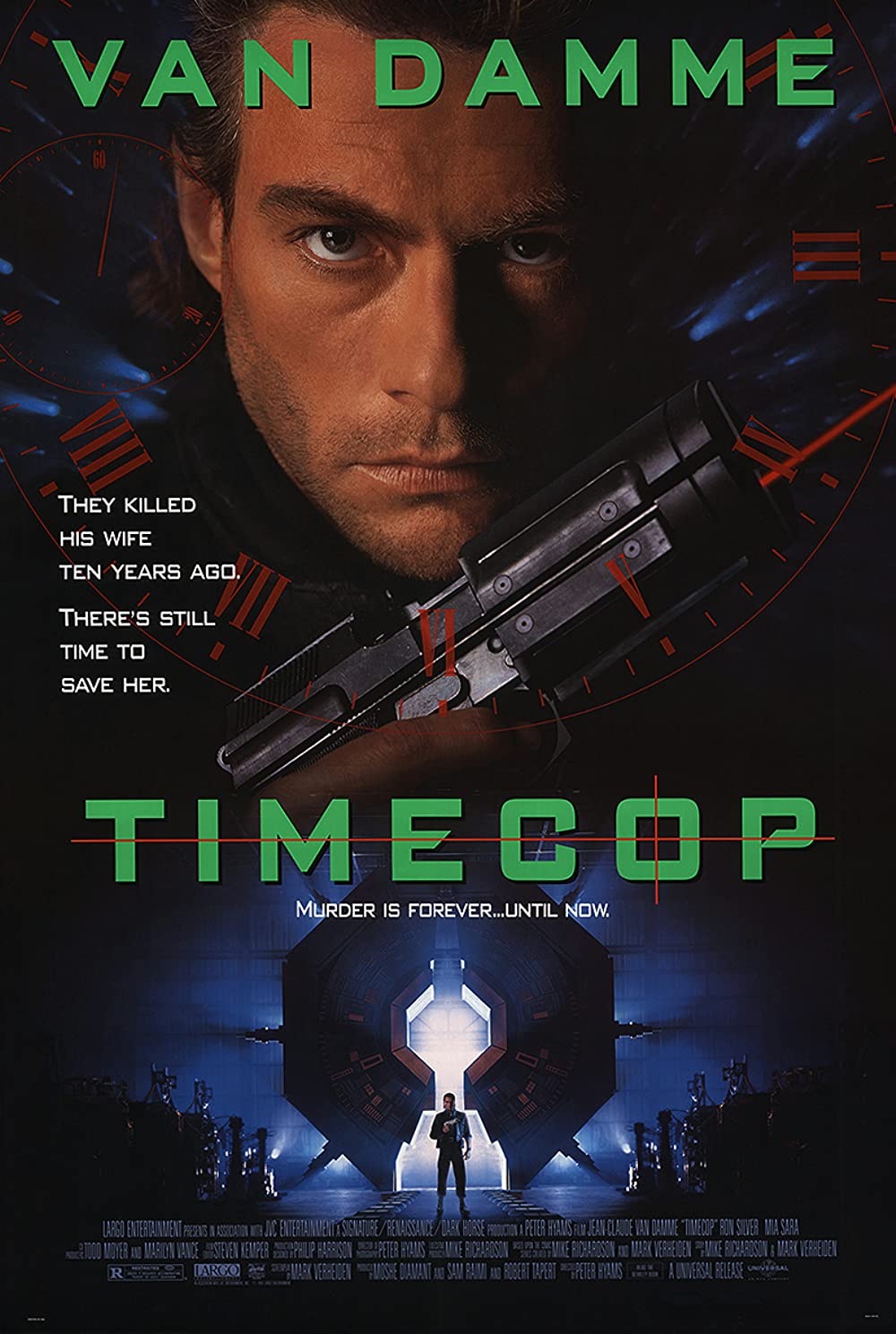
1994’s Timecop is one of those rare Science Fiction and Fantasy misfires.
 
Had everyone involved simply stuck to delivering even the bare minimum of formulaic conventions, then the finished product should’ve easily surpassed the sum of its parts.  You’ve got time travel.  You’ve got a good vs. evil story.  You’re got a reasonably charismatic young lead rounded out by a cadre of great-looking supporting players, many of which with solid histories on the big and small screen.  You’ve got a director with a track record in genre properties.  And you’ve got a learned and experienced production crew.
 
Yet, it’s a fairly middling ordeal through-and-through.
 
Peter Hyams directed the affair from a script provided by Mike Richardson and Mark Verheiden.  Richardson has gone on to producing such genre fare as Hellboy (2004), Alien Vs. Predator (2004), Hellboy 2: The Golden Army (2008), and Syfy’s popular Dark Matter and Resident Alien as well as Netflix’s The Umbrella Academy.  Verheiden – a name I’m familiar with more for his work in the comic book industry than anything else – has also found a measure of success as a producer with his attachment to Smallville, Syfy’s Battlestar Galactica, TNT’s Falling Skies, and Starz Network’s Ash Vs Evil Dead.  As for director Hyams?  Prior to Timecop, the man graced the silver screen with such entries as Capricorn One (1977), Outland (1981), and 2010: The Year We Make Contact (1984).
 
Still, all of this creative wattage failed to lift the great premise of a government agency policing time against those who would alter the past in order to affect the future (for their benefit) above the level of a TV-grade potboiler.  How did it all go wrong?
 
That answer lies in its execution.
 
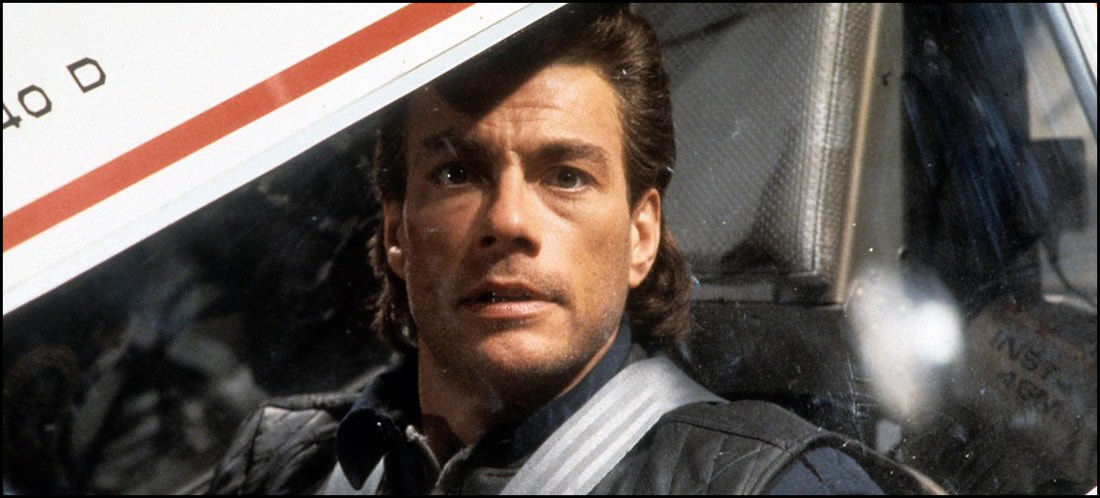
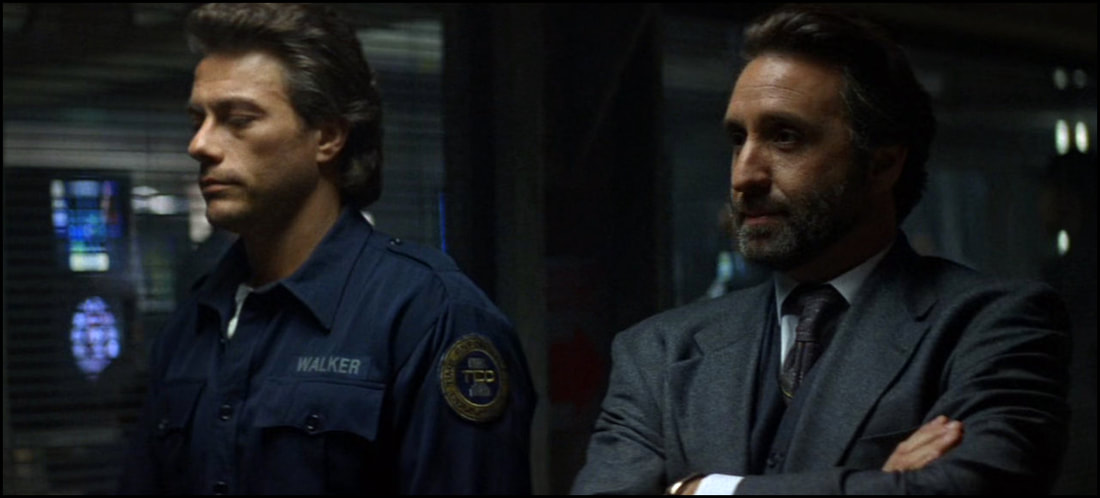
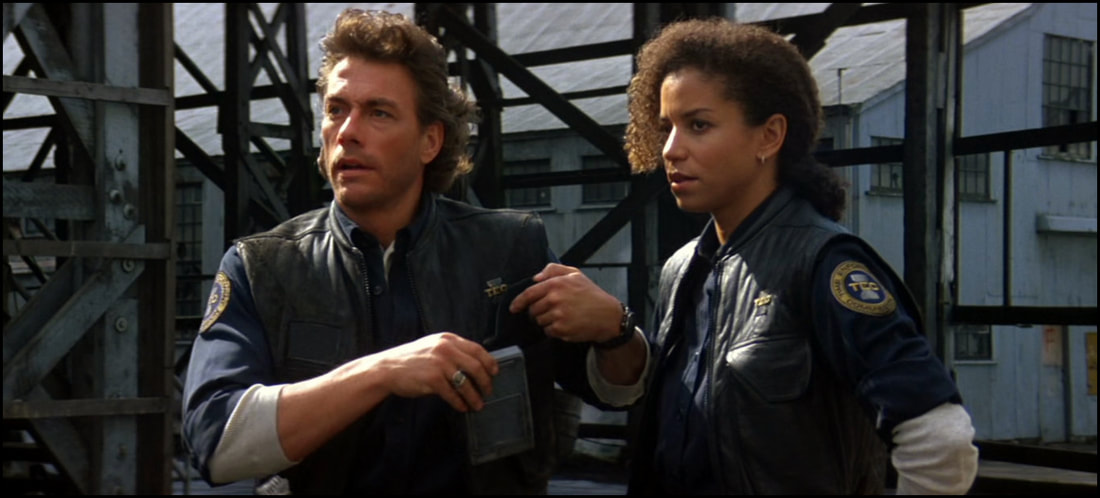
Jean-Claude Van Damme was cast as lead Max Walker, the Time Enforcement Commission’s top agent.  In this role, he’s tasked with heading back into the years gone to nab suspects who’ve escaped into history for whatever nefarious purposes they intend.  At this point in his professional career, Van Damme was arguably looked at as a more affordable alternative to box office superstar Arnold Schwarzenegger but hadn’t quite yet found the same level of success in receipts.  His earlier genre projects – Cyborg (1989) and Universal Soldier (1992) – certain put him on the cultural map so far as fans of Science Fiction and Fantasy were concerned; but his true and loyal fan base was more aligned with his more sports-leaning athleticism.  Flicks like Bloodsport (1988), Kickboxer (1989), and Hard Target (1993) were tailored more directly to the man’s physical skills, and – like actor Sylvester Stallone did with his Rocky franchise – Van Damme established his screen credentials on his ability to best his foes in physical combat more than a show of wits.
 
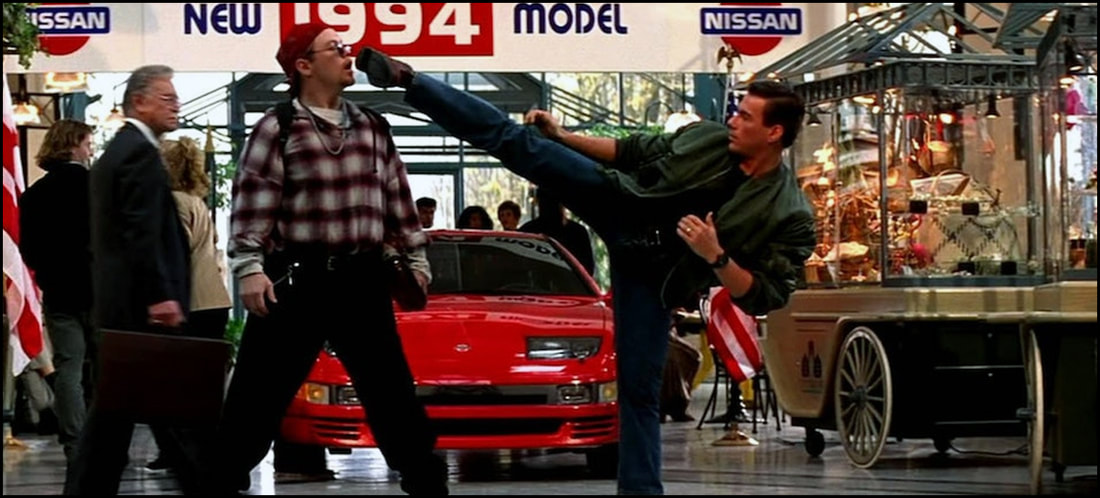
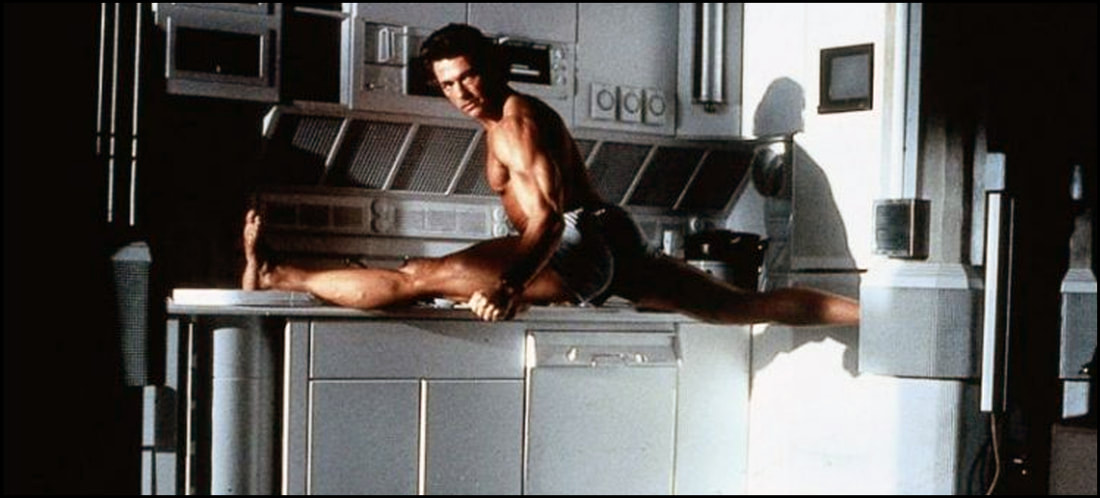
As a consequence, I thought that there were bits and pieces of Timecop similarly fashioned to appeal more to Van Damme’s core audience than they were scripted as organic to this narrative.  Though others might pass them off as benign scenes thrown in maybe for their ‘cool factor’ or even a bit of comic relief, I found the emphasis on Walker’s high-kicking abilities and other various feats of strength more intrusive than anything else.  If you think of a film like a road trip, these were road bumps that any other driver would’ve avoided … but the production felt they were necessary to bolster the budding career of this young star.  In fact, it was almost as if producers were trying to say, “Wow, look what our guy can do!”

Picture
Picture
Picture
Picture
Picture
There was a time in my life when I just loved to use the word ‘abysmal.’  It’s one of those rare words that I think rather perfectly describes whatever it’s applied to, and I thank the wordmakers for crafting a description that’s ultimately fitting almost whenever it’s properly used.
 
So … I don’t think Timecop is an abysmal film, but I do think that in so many respects the folks involved just made some abysmal choices.  I don’t fault Van Damme or the producers for making these decisions, but – at the end of the day – we all live and die by whatever we choose to do.  I think modifying an obvious SciFi and Fantasy premise and the corresponding script to fit the athletic requirements of an actor’s audience is wrong unless it’s done fully for comic intent.  And no I don’t think these sequences were crafted for comedy, making them just ill-timed and atonal with the rest of the picture.  That’s the horse I rode in on, and that’s the horse I’m riding out on so far as Timecop is concerned.
 
That’s why I say it isn’t a bad film.  It’s just a complete misfire, one that was calculated that way.  As a franchise, I think it’s ripe for a makeover.  I’m aware of the short-lived TV spin-off as well as the sequel, but this is one possible tentpole prospect that could use a creative do-over.  If done right, then it could be grand.
 
This time, let’s leave the split kicks to Kobra Kai.

​-- EZ
0 Comments

Stardate 09.15.2022.A: Love Is In The Heir - A Review Of House Of The Dragon's 'King Of The Narrow Sea' (S01E04)

9/15/2022

0 Comments

 
Picture
Well, springtime has finally come to King’s Landing – in one cinematic sense of the word – and that’s allowed for a good number of these regal players to finally engage in one of Game Of Thrones signature acts: namely, they’re finally bumping uglies!
 
Yes, yes, yes.  It was only a matter of time, you know.  House Of The Dragon – like its predecessor – is on pay cable, and Thrones rather famously made use of some adults-only footage early in its run on HBO.  Honestly, I didn’t have as much an issue with it as some viewers seemingly did; sex acts without some kind of narrative relevance – think of it as just gratuitous – might be status quo for some broadcast and streaming entities, but I thought most of what was crafted in the expansive kings-and-queens franchise had more thematic purpose than I’ve seen elsewhere.  Granted, there are always exceptions, but I found most of it perfectly acceptable.
 
However, I think all of us knew going into this particular House that we were inevitably going to see more of the same, and “King Of The Narrow Sea” delivered the goods not so much in regal fashion as it did to – ahem – stir the pot.
 
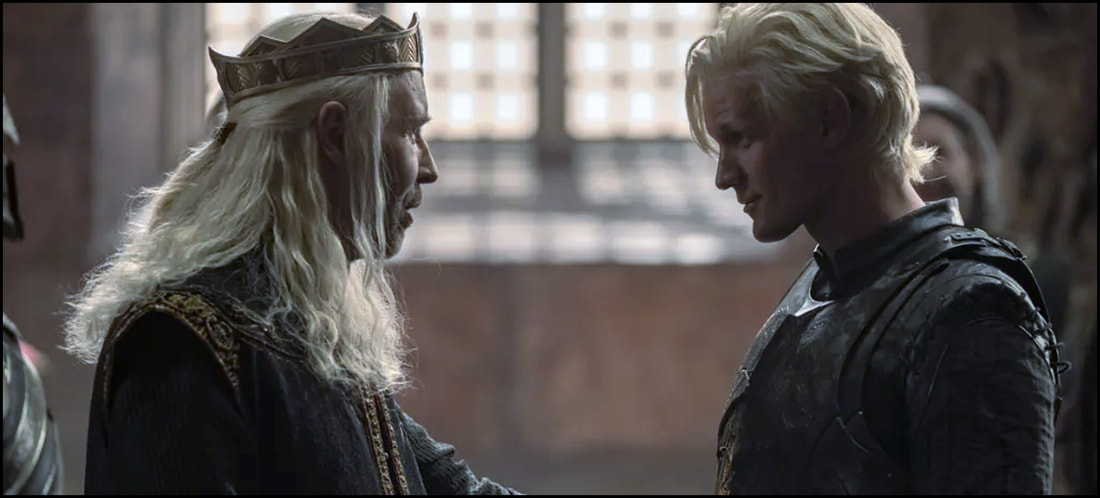
Though it only took him four years (according to the dialogue), Prince Daemon Targaryen found himself back in the good graces of the king (though it didn’t last for long, did it?).  Returning to Kings Landing, he essentially prostrated himself to his older brother, pledging his commitment once again to the crown while surrendering his own newly earned title as well.  Applause, applause!  Bring out the wine!  It was a curious development – one I hadn’t foreseen in the slightest, expecting Daemon’s greater arc to follow the course of a magisterial rival – but it did allow for the somewhat randy uncle to make a move on his niece (and heir to the throne) Rhaenyra.
 
Certainly – it would seem – one way or another, this prince will have this kingdom!
 
While their quasi-coupling (and conscious uncoupling) may’ve come as a surprise to those not watching closely, it fit perfectly well within what House has kinda/sorta loosely established in its first three hours: there’s a smoldering chemistry to these two when they’re together.  (In fact, one might argue that’s the only real fire burning anywhere away from the show’s signature dragons.)  They’ve been sharing glances and moments alone, so I think their ‘relationship’ was always destined to be something deeper.  All I can say is that it came to a head much sooner than I expected it to, but it is what it is.  The fact that Daemon had pause when he did, ultimately refusing to go through with the – ahem – intimacy, could underscore that there’s more to him than meets the eye … but hasn’t that been the case with, perhaps, every character audiences have come to know since this franchise began?  Could this signal a full turnabout with him destined to be the show’s hero?  I guess – in that respect – only time will tell.  (Alas, I’m not familiar with the source material as are some who blog Science Fiction and Fantasy.)
​
Picture
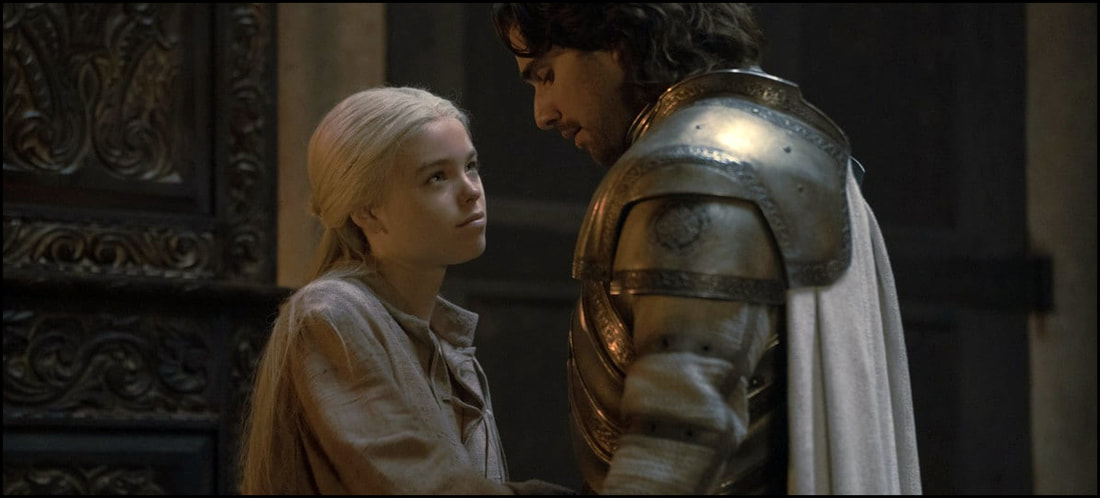
What Daemon’s machinations did bring about was also more than a bit predictable: after being so roundly rejected by her dear uncle, Rhaenyra rushes back to the castle for a night of fun with Ser Criston Col, her royal guard.  Again, their attraction has been showing slowly across these few episodes; and I predict many in the audience saw this pairing coming as well.  She did personally select him to serve on the King’s guard, and she did spend some quality ‘away time’ with him in the forest.  Still, it was handled very nicely – with good taste – and you can bet precisely for those reasons it’ll set off a veritable firestorm of plot development as the season continues to unfold.  Anything with a silver lining always turns to crap at King’s Landing.  Always.
 
Not to be left out of the – ahem –spring fever, Queen Alicent finds herself summoned to her husband’s chambers for some royal intrigue of her own; and we’re shown a rather discomfited lady doing little more than lying beneath the man as he goes about his business.  It’s a rather proper portrait for the girl who kinda/sorta found herself silently and secretly manipulated (by her dear old dad, Otto Hightower) into the arms of the widowed king; clearly, she’s entered into this marriage out of some sense of familial responsibility and not over love.  Though we’ve all suspected as such, these moments confirmed all of our suspicions.  (And, for the record, I still think there’s something ‘up’ with Otto.  I’ve got my eye on you.)
 
All of this heavy petting aside, “King Of The Narrow Sea” was little more than a series of calculated developments, all that shifted the program’s focus in a different direction.
 
Where do I begin?
 
Daemon finds himself banished.  Again.  His beloved Mysaria’s back in the whoring business.  Again.  The King fires his Hand.  Alicent doesn’t know whom to trust.  And Rhaenerya’s fidelity remains a sticking point … but father has pledged her hand to another anyway.  Gone is all talk of war – likely a brief respite, mind you, knowing this franchise – and now these various pieces have been moved about the figurative chess board.  The hour’s pacing felt a bit off – at one point, I wondered if this was two different hours edited into one, resulting in a bit of clunkiness – but sometimes that happens when the focus shifts from action to drama, as it appears this one has.
 
Buckle up, kids.  It looks like the kingdom’s still in peril.

​-- EZ
0 Comments

Stardate 09.14.2022.B: 1990's 'Hardware' Turns 32 Years Young Today!

9/14/2022

0 Comments

 
Picture
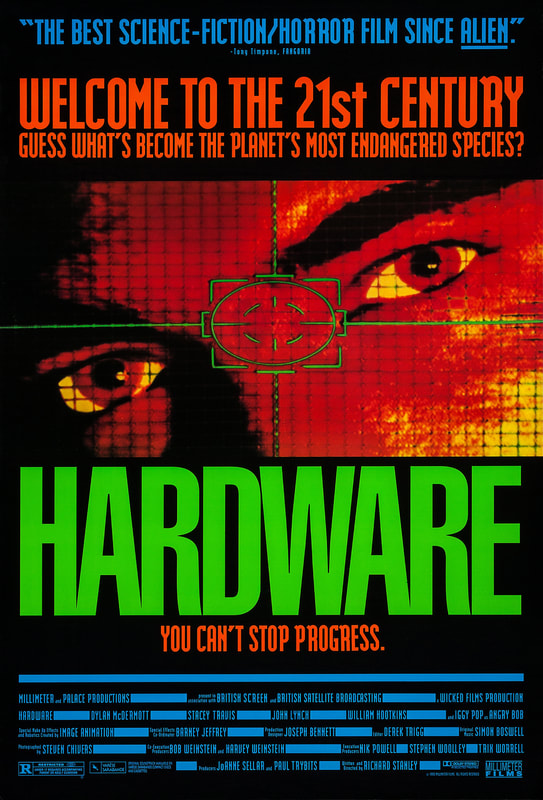
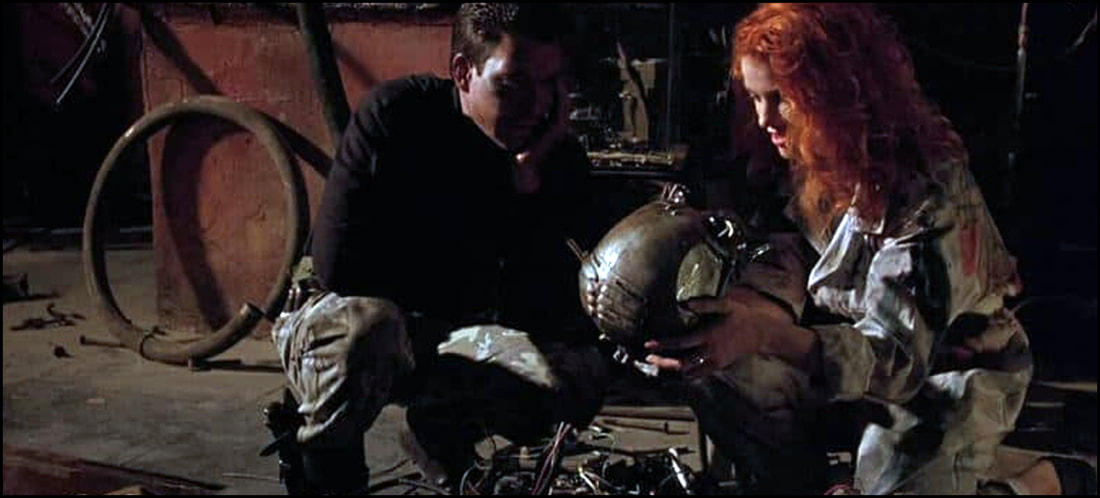
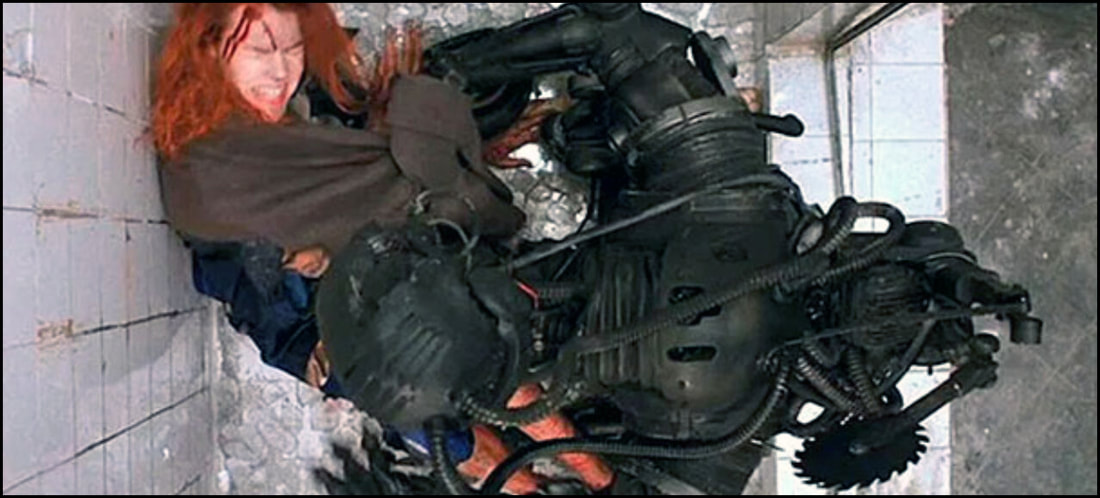
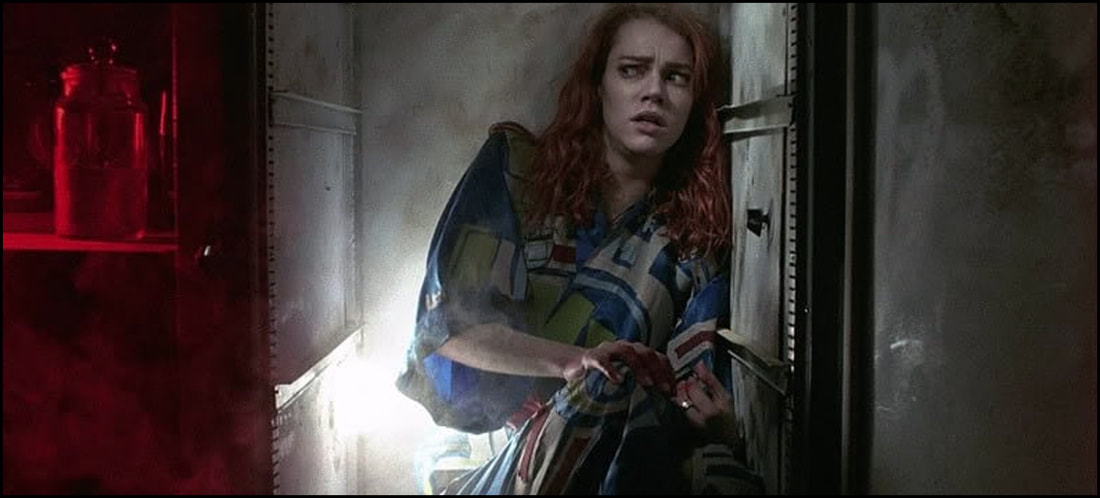
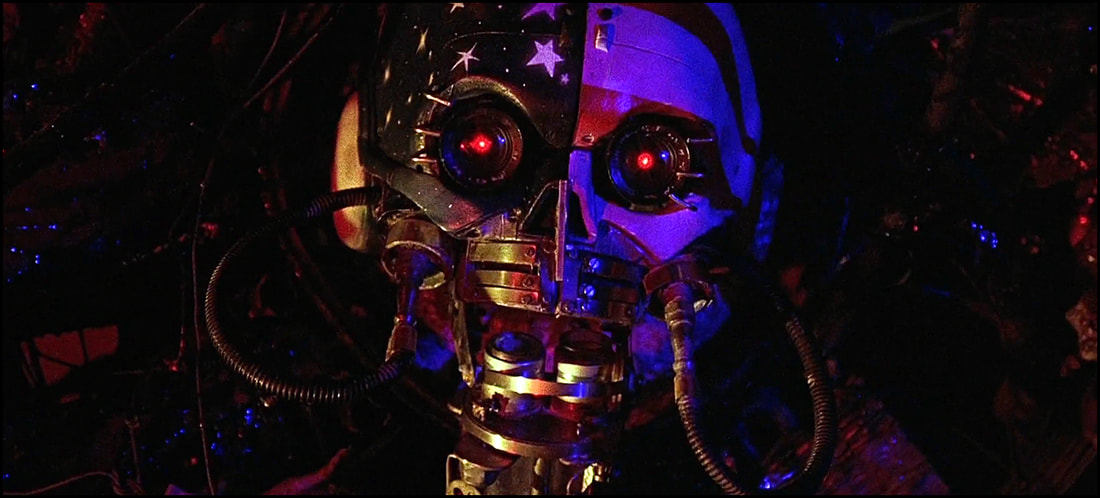
It’s been entirely my experience that Richard Stanley’s Hardware is an incredibly divisive film.
 
Far be it from me to court a bit of controversy (snicker snicker) but can I just say that I think the picture has, largely been misunderstood?  I’ve been wrong before – my wife occasionally insists I am to a fault – but could it be that the folks who don’t like Hardware base their opinions not so much on what the film says as they do their interpretation of the film?  I say this because a lot of what I’ve heard them suggest the flick is about – anti-Americanism, misogyny, violent feminism, torture porn, etc. – I just don’t quite see in it.  Oh, sure, there’s an undercurrent of nihilism one could argue – or maybe a preponderance about the destructive tendencies of mankind – but everything else I’ve heard I strongly think is subject to explanation.  Honestly, if Stanley put it in there literally, then I missed it.
 
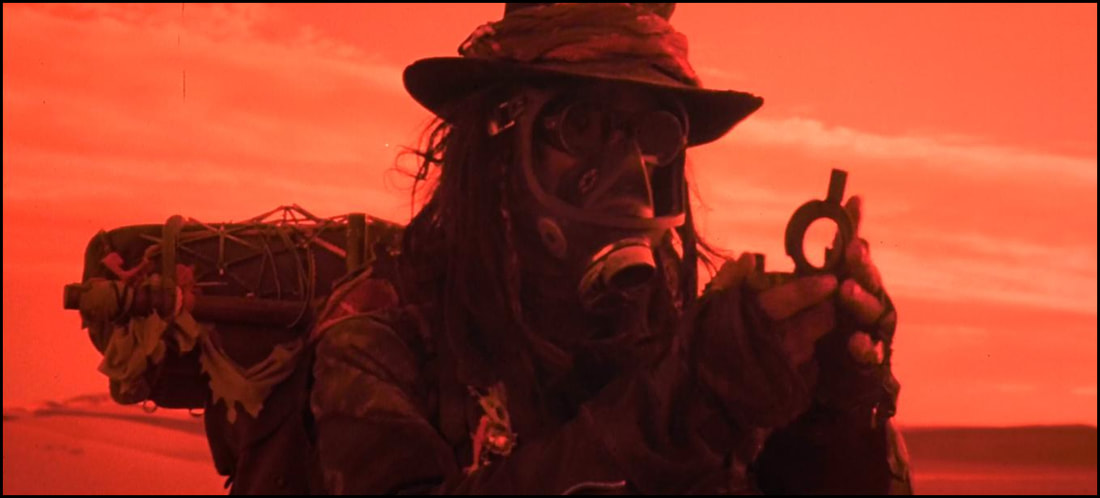
What I do see is a fabulous Horror shocker with a rather obvious – if not a tad bit predictable – Science Fiction edge.  Thematically, I’ve often thought it similar to James Cameron’s The Terminator (1984), though I can understand why some folks blanch at that association more so than the comparison.  What you have is a machine that’s been programmed to do what it does – kill, kill, kill – and it goes about its business once accidentally brought back to civilization by stars Dylan McDermott and Stacey Travis.
 
(Might I just add I’ve always loved Travis in this work … or does that make me a misogynist, too?)
 
Produced by Palace Pictures with a few other contributors, I’m well aware that the film’s origins and ownership issues are a bit of screen legend themselves (so I’ll leave that alone).  Based on a story by Steve MacManus and Kevin O’Neill, Stanley adapted and shot it for the screen (with some other dialogue provided by Michael Fallon); and it’s a great and claustrophic bit of tech noir that’s chugged and chugged like the little engine that could.  It slowly built itself a cult audience over the years and – based entirely on a fairly recent viewing – I think it holds up even decades later.
 
Here's the plot summary as provided by IMDB.com:
“The head of a cyborg reactivates, rebuilds itself, and goes on a violent rampage in a space marine’s girlfriend’s apartment.”

Picture
Picture
Picture
Picture
Picture
Now, folks, don’t mistake my enjoyment of the film as a dismissal of anyone’s pressing concerns about the flick’s imagery.  Not in the slightest.  If that’s what you (and yours) see in there, then that’s on you.  My take is that I understand those positions though I may not share them.  I don’t doubt that there’s violence in the real world, and I don’t doubt there’s an awful lot of it directed against the fairer sex.  My point is that I don’t see a lot of that coming from robots, so I do try to temper the narrative when and if I can do my part to contribute to the dialogue.
 
All of that aside, Hardware did enjoy a bit of praise in its day when it made the rounds of the film festival circuit; and that’s certainly no surprise.  Its subversiveness – especially when paired up with the Science Fiction, Fantasy, and Horror angles – is exactly the kind of thing that generally catches the attention of folks who attend those things.  Indeed, one might make the case that Stanley’s work predates what audiences eventually came to love about the wider Saw franchise, wherein any number of good-looking talent were reduced to walking meat puppets in service to the theatrical bloodshed.  Yeah, yeah, yeah: I know that those characters may’ve had it coming as the consequences from doing something bad in their fictional pasts, but my point remains the same, that being Stanley did it first … and maybe even did it better on a much smaller budget.
 
Whatever your predilection, I think a round of ‘Happy Birthday’ is the least we can give this killer cyborg.  Keep the thing happy, folks … we know what happens once the programming kicks in.

​-- EZ
0 Comments

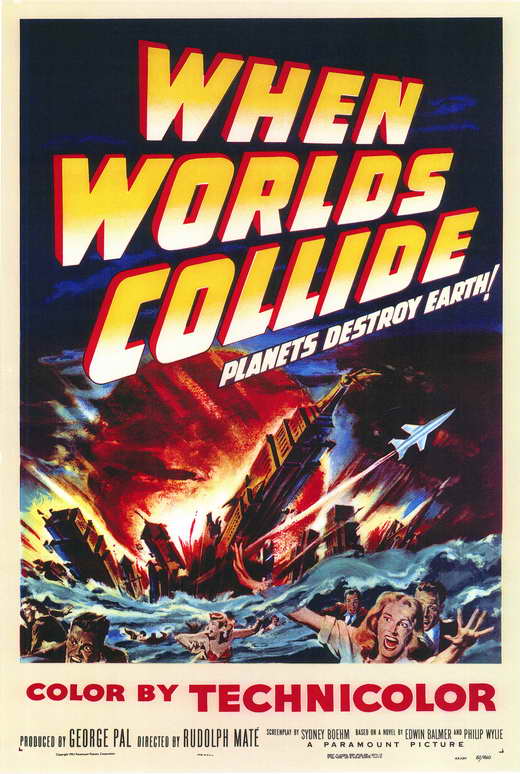
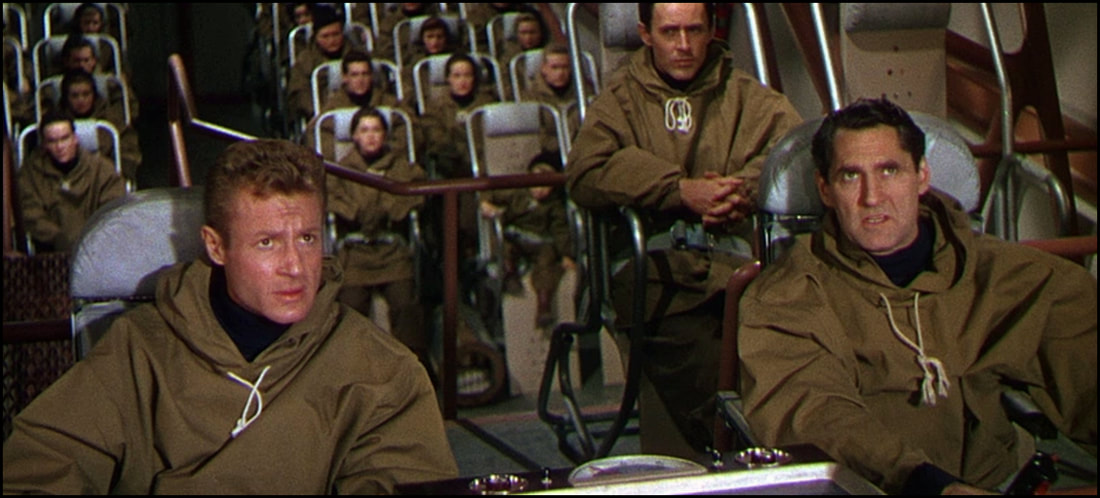
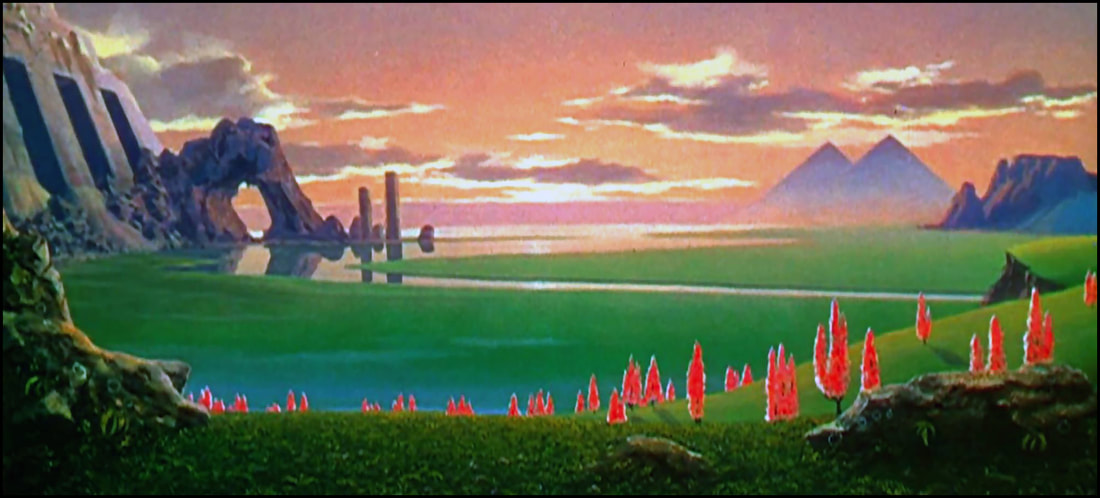
Stardate 09.14.2022.A: 1951's 'When Worlds Collide' Turns An Incredible 71 Years Young Today!

9/14/2022

0 Comments

 
Picture
Get ready to be shocked, folks:
 
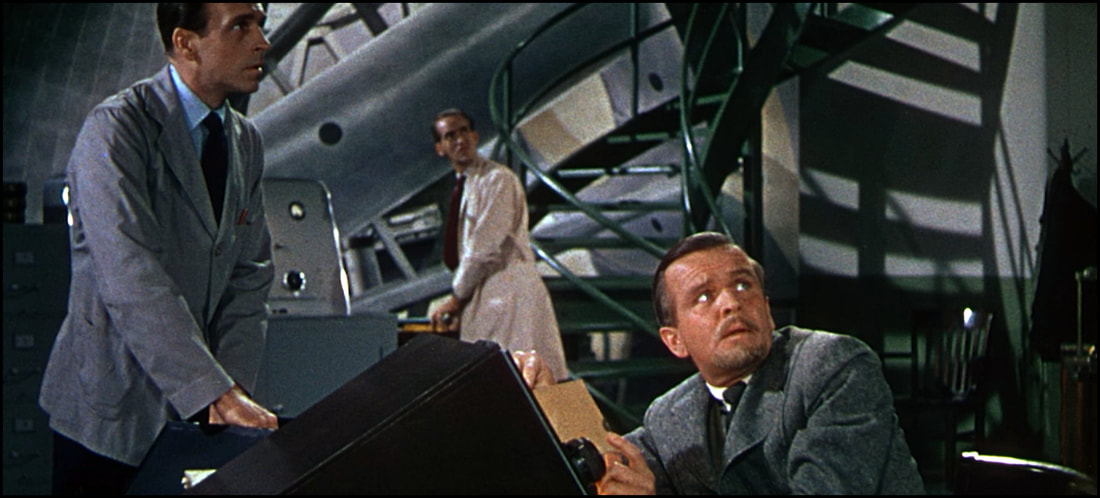
When it comes to When Worlds Collide, my opinion once again diverges from the popular consensus.  Whereas many in the Science Fiction, Fantasy, and critical community consider it a bona fide classic, I honestly just consider it “good.”
 
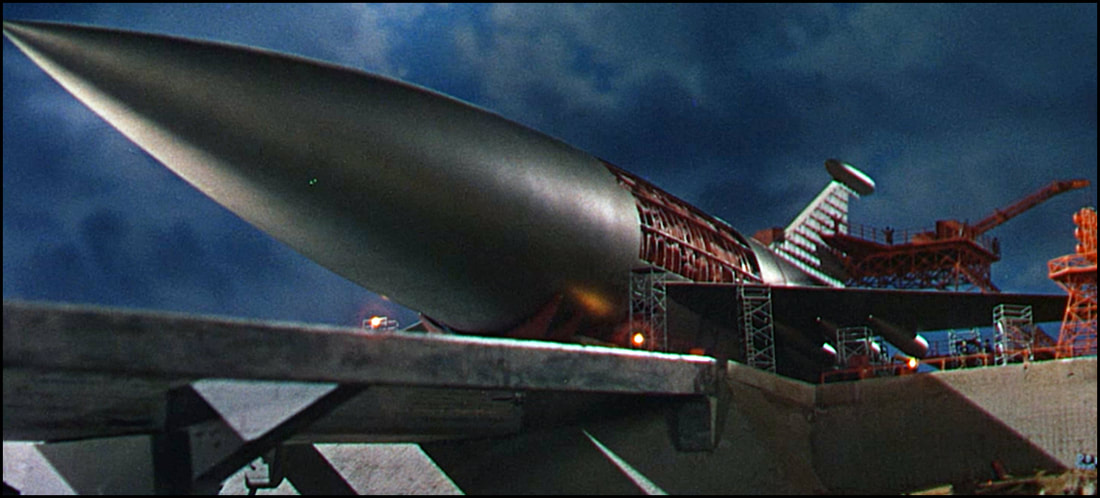
Now, none of that is intended to take anything away from the 1951 flick.  It certainly deserves all of the high marks it’s received in history, including the 1952 Academy Award win in the category of Best Special Effects.  Those were certainly a bit groundbreaking for their era, and I’ve no doubt that the motion picture went on to inspire many, many other filmmakers and storytellers to spin a bit more yarn about Earth’s future and mankind’s quest to move from having the dirt under his feet to floating weightless in the final frontier.
 
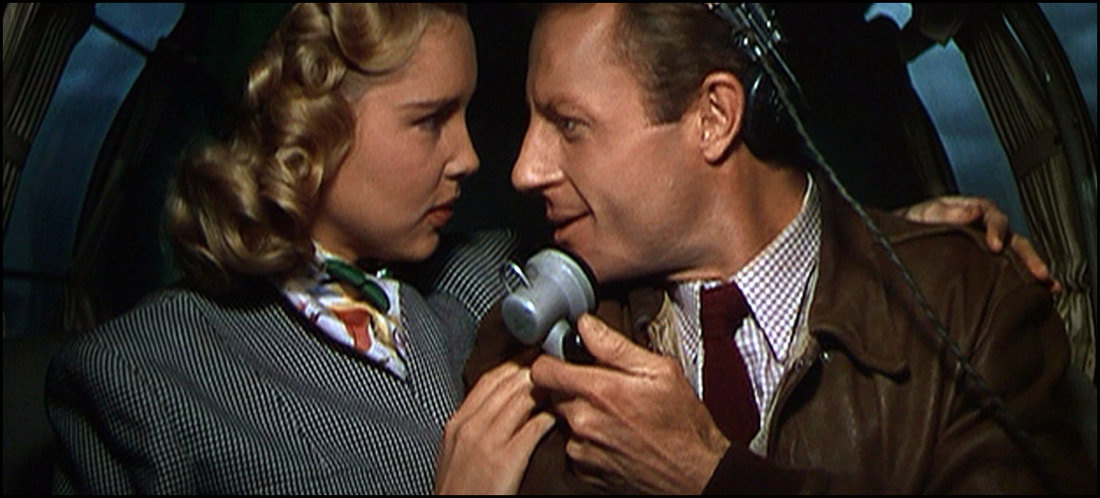
I think my reservations with the film largely are owed to the way I experienced it.  For years, it was one that I just couldn’t find on any channel.  (Yes, kids, I’m talking about back in the days wherein regular television was the only outlet for home-based entertainment.)  I’d often stumble upon it well after it had started, meaning I was joining the film in progress; and I’ve never been a good watcher of things that way.  I end up asking myself a lot of questions about what I’d missed, and the end result really wrecks the experience for me.  I did eventually rent a copy in the late 80’s or early 90’s (I think it was), and – outside of the effects work – I just don’t recall being all that interested in it.  The characters all seemed a bit flat to my tastes, and – sigh – I’m rarely a fan of the forced love interests of the bygone era.
 
More than anything, I bring up my opinion of the film because it surprises me.  When Worlds Collide was produced by the late, great George Pal (1953’s The War Of The Worlds and 1960’s The Time Machine), whose stuff – even the weaker entries – I usually love.  Pal was the George Lucas and Steven Spielberg of his day – I’ve heard Spielberg speak very highly of the man’s body of work – and his track record for quality storytelling of its day is incredible.  The guy was nominated for a total of seven Oscars over the life in the business – along with a few Hugo Award nominations – but even those credentials fail to convince me of Collide’s greatness.

As I said, I just find it “good.”

Picture
Picture
Picture
Picture
Picture
Still, I do give Collide a measure of kudos when it comes to the handling of its subject matter.
 
For those who missed it, the story is about Earth’s impending demise: there’s an impending stellar catastrophe that spells certain doom, and – in order to survive – mankind will have to take to the stars in a rocketship bound for a sister planet, one that scientists believe can sustain our race in a bid to start over.  Collide’s script by Sydney Boehm (adapting the novel of the same name by Edwin Balmer and Philip Wylie) could’ve easily descending into dramatic speeches of doom and gloom, but the tale as constructed only circumstantially flirts with the obvious existentialism.  Instead, the characters mostly possess a strong work ethic, one that keeps them committed to carrying on only our culture’s best traditions … despite the eventual rising panic in society’s mad rush to live on we’re treated to in the last reel.
 
I’d read somewhere once that Pal had intended to produce a sequel to the film, one that would’ve depicted the trials and tribulations of men working to survive on the alien world seen in Collide’s closing moments.  While I’m unaware whatever happened with that possible effort, I think I’ve made peace with my feelings over the original as I’m not sure a follow-up really was all that necessary.

-- EZ
0 Comments

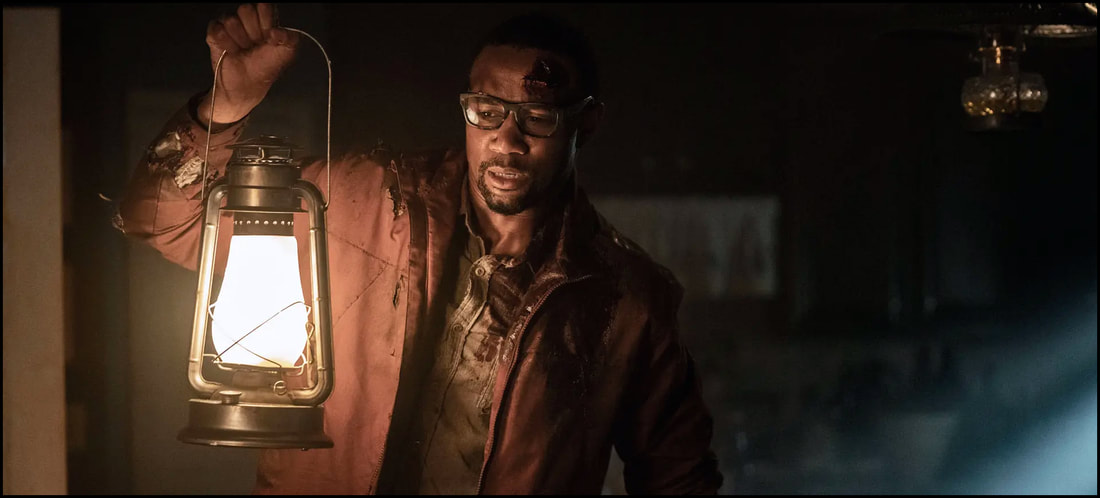
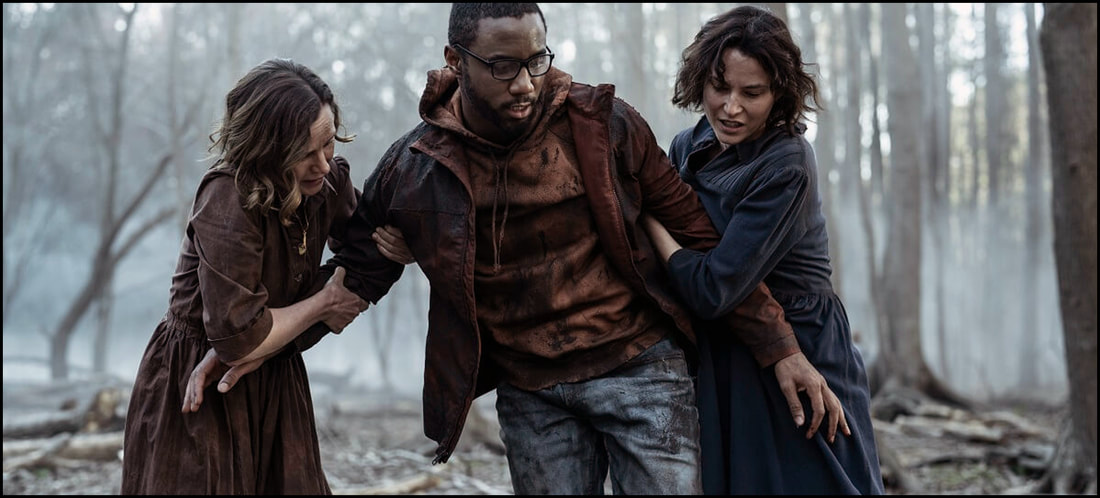
Stardate 09.13.2022.B: 'Davon' Proves We're Not In Kansas Anymore - A Review Of Tales Of The Walking Dead's S01E05

9/13/2022

0 Comments

 
Picture
As I’ve always argued, I can appreciate any creative team’s desire to try something different.  Still, I’ve always found it hard to know exactly what the phrase might inevitably mean.
 
In the case of AMC’s The Walking Dead spin-off – Tales Of The Walking Dead – I was doubly unsure of what to expect.  There wasn’t an awful lot of pre-release chatter online or in the entertainment trades other than the announcement here and there that the property would seek to tell stand-alone stories within the wider universe created by the original program.  Some of these promised to tie to established characters, and some were intended as more standalone trips set in familiar locales but involving new places and names.  Perhaps playing their cards close to their chest, Tales’ showrunners hoped to use ‘the element of surprise’ more than anything else and let the chips fall where they may when these new mini-movies were screened for the public on the cable network.
 
For what that was worth, I thought it all sounded promising, especially since I soured on Fear The Walking Dead after two seasons of meandering for a collective point and didn’t much care for The Walking Dead: Worlds Beyond even in the slightest.  (I did make it through that show’s first season but only hung on for two episodes in its second and final series.)  Maybe – just maybe – these showrunners could turn some all-new stones in these Tales.  Maybe they could wash the stink of death from the undead (pun intended), and they could show us the same zest to rush headfirst into danger like The Walking Dead in early trips into the Apocalypse.  Certainly, the format alone offered up a bit of hope knowing that single-hour-outings might very well push these storytellers to new, unsung heights.
 
Well …
 
We’re five episodes in, and I’m considerably underwhelmed, to say the least.  This show has hardly brought new life to rotting corpses.  Hell, even its corpses aren’t that much rot.
 
Now, in fairness, it isn’t as if all of these stories have been a waste of their hour-plus run-time.
 
They’ve delivered a few laughs in a few places, and they even hinted at ‘End Times’ romance being possible in interesting ways.  Heck, the fourth episode even toyed with the idea that perhaps even zombies are a species requiring further legitimate scientific inquiry; accept that premise or not, it’s still something we hadn’t quite seen before from this franchise.  While it’s understandably challenging to hit home runs right out of the gate, by the fifth episode in (out of a paltry six comprising a whole “season”) I think the audiences have a right to expect some measure of quality.  But “Davon,” the title of said installment, felt like some community college effort crafted by a bunch of film students who were inspired by The Walking Dead to try and do their own on a community college budget … and that’s downright insulting.
​
Picture
Davon's biggest problem?
 
Well, for starters, there really aren’t any Dead in it.
 
Even worse: it doesn’t even need to be set in TWD universe!
 
Though we do catch sight of a walker here and there (up until the mystery’s big reveal in the final moments, in which we get a pair of fresh ones), I was unsure of what to make of them because the story is woven through the eyes of our narrator, Davon, who’s admittedly suffering a pretty massive head wound.  Furthermore, he admits that his memories come-and-go (likely tied to said wound), and this clearly establishes him as a dubious source of information.  In other words, he may not be deliberately dishonest with what he tells us; rather, he may be confused and completely misremembering these events, all with some narrative attempt to keep us focused away from the story’s central mystery … which might be one, two, or a whole series of murders … it just is never clear …
 
… which is the result of – ahem – bad writing.
 
(Sorry, folks, but sometimes you have to call a strike “a strike,” and this was damn near a strike-out.)
 
IMDB.com attributes to script to Channing Powell, a name that should be familiar both to viewers as well as the breadth of this television universe.  Indeed, he’s crafted a few dozen scripts across both The Walking Dead and Fear The Walking Dead as well as serving as a producer on both.  Given those credentials I think it’s fair to have expected something a bit less muddled than what “Davon” is, so I’m chalking up this definitive misfire to the fact that the director and crew wanted to mirror their lead’s cognitive dissonance stylistically.  It’s an arthouse attempt to deliver something different.  Either that, or I’ve absolutely no idea why anyone thought this particular work was N-E-C-E-S-S-A-R-Y at this juncture within the wider TWD universe.  It serves no purpose other than to fill out a commitment, making it filler.
 
Because there was so very little focus on these zombies (“but why?), I can’t help but wonder if “Davon” may’ve been a rejected screenplay someone pulled out of a drawer, dusted it off, stuck in a few of the TWD’s usual suspects (i.e. walkers) and proclaimed, “Here, let’s film this!”  Some of its creative choices felt less like they were part of a truly original story but more like an attempt to put a facelift on the drafted elements (i.e. the setting being a French-speaking community in Maine … again “but why?”) in hopes that audiences might not notice the seams.  Absolutely nothing about this chapter felt understandably organic to TWD’s universe as established – much less as we’ve come to know it after ten seasons on-air – and I’m absolutely gobsmacked how anyone involved in the production of this show might have concluded “Davon” was a good idea.

Different for different's sake isn't a foundation upon which to build any show, especially when the script ignores almost entirely that fact that folks are drawn to the property for your corpses.  Davon felt more like a cop-out ... as I hate chalking up every detriment up to a singularly bad idea.
 
Congratulations, Tales Of The Walking Dead!  You’ve hit a new low.

​-- EZ
0 Comments

Stardate 09.13.2022.A: 2021's 'The Retaliators' Hits And Bleeds Very Close To Home

9/13/2022

0 Comments

 
Picture
Back in my college days, I struggled through a writing class with one professor who insisted that “every film you watched had to be about something.”
 
On one level, I naturally agreed.  Every film – whether we like the story or not – tells a tale.  Right?  It takes the audience on a journey through a series of related events – all involving interconnected characters – and inevitably delivers us somewhere, to some destination.  Where I pushed back, however, was that I believed some fables were crafted for purely entertainment purposes and, thus, didn’t really mean all that much.  Were this the case, any messaging a viewer took from it was clearly a secondary consideration of the cast and crew … so why make any intellectual fuss over what it all may or may not mean?
 
When the instructor argued with me further, I tried coming at the topic from another point of view.  For example, the professor – this being the 1980’s – had an incredible artistic appreciation for a certain war film (I won’t name it, as it doesn’t really matter) of the time and was constantly (constantly!) referencing it, its message, and its metaphors at every opportunity.  So, one day I mentioned his favorite war lick, and I explained how I took a different meaning from the ending than he did … so – based entirely on his experience versus mine – who’s to say which is the better interpretation?
 
Well, he was the one paid to provide opinions – not I – so, in his estimation, his measured analysis mattered more than mine.  Ouch.
 
In any event, I’ve long argued that, when a film seeks to ultimately entertain those who buy a ticket, there’s still a respectability to that process … and today I’m arguing that same point on behalf of The Retaliators (2021).  It’s a Horror/Thriller from the directing team of Samuel Gonzalez Jr., Michael Lombardi (who also headlines it), and Bridget Smith.  While the flick flirts with some mixed messages about revenge and redemption, it inevitably seeks to amuse.  To scare.  To get your blood pumping.  Nothing more.  Nothing less.
 
(NOTE: The following review will contain minor spoilers necessary solely for the discussion of plot and/or characters.  If you’re the type of reader who prefers a review entirely spoiler-free, then I’d encourage you to skip down to the last few paragraphs for my final assessment.  If, however, you’re accepting of a few modest hints at ‘things to come,’ then read on …)
 
From the film’s IMDB.com citation:
“An upstanding pastor uncovers a dark and twisted underworld as he searches for answers surrounding his daughter’s brutal murder.”
​
If you’re looking for your film to definitively say something about the greater world-at-large, then you’re going to have to be much more specific than Darren Geare and Jeff Allen Geare were in their screenplay for The Retaliators, an impressive outing that relies heavily on pushing some very predictable moral buttons but delivers a seemingly never-ending assortment of bloody showdowns in its second half.  Each and every set-up that preaches against violence ends up adding to the body count; before you know it, this broken man-of-faith looks less and less like Jimmy Stewart and more and more like John Rambo.
 
Much of this is owed to the world as created by the Geares and their team of directors (three are listed in the credits).
 ​
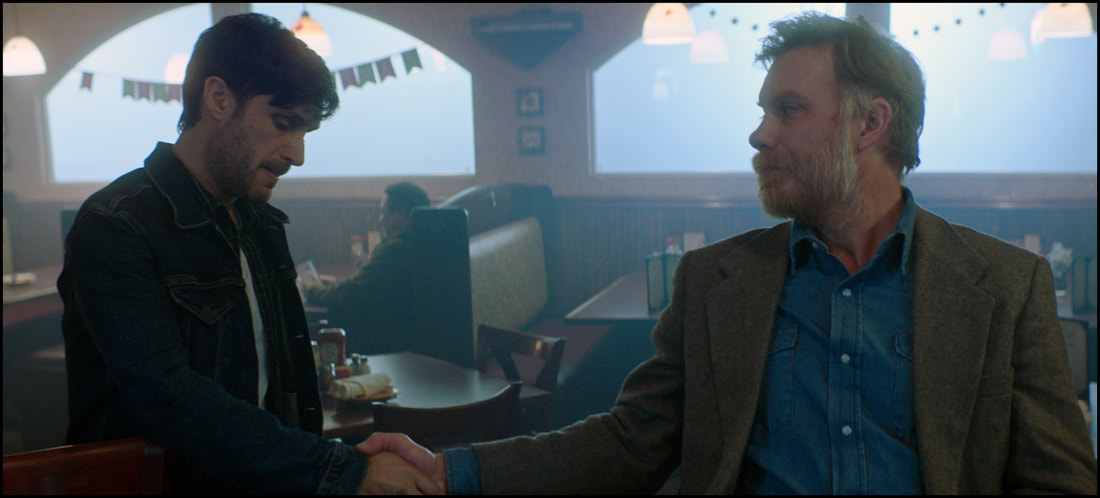
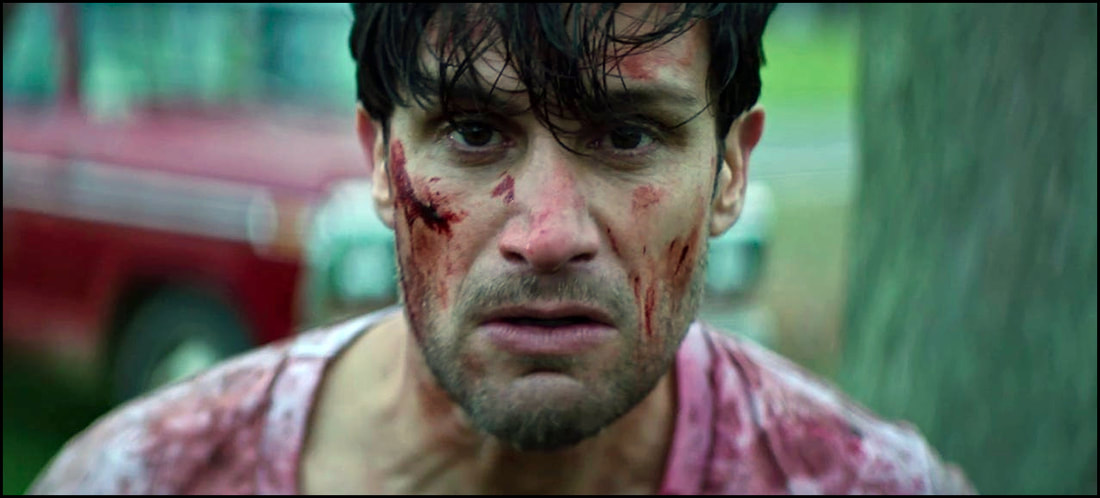
Picture
In short, The Retaliators piles on practically every conceivable vice our culture has suffered from, currently suffers from, and (likely) will always suffer from in its creative assault on our senses.  Rarely has one film reveled in so much debauchery and, yet, neither condemned nor condoned it, instead just casually dropped one more metaphorical log on its metaphorical fire.  This story has drugs.  It has money.  It has strippers.  It has murderers.  Rock’n’roll.  Lap dances.  It has dealers.  It has dirty cops.  It has gangs and bikers.  It has torture.  It has dungeons.  And somehow it even manages to squeeze the less-than-able bodied and even a bomb shelter into its confines.
 
Though I don’t know for certain, I’d like to think that everyone involved consciously did this in order to strip us culturally back to a time when a bit of Old Testament-style justice (“an eye for an eye”) truly meant something.  It wasn’t just a saying, just something folks who went to church talked about.  In fact, it was how several generations of us were raised, and some might argue that its loss from the wider moral discussion may explain why there’s so much wrong with society today.  I’ve no way to know if that’s what I’m to deduce from all of this chaos because no one says so, certainly not even our once humble lead Pastor Bishop (played effectively by Lombardi) whom we see telling a white lie to his parishioners about how he used the word of God to defuse a conflict over a Christmas tree.  (Truth: he didn’t, deliberately misleading them as to the efficacy of his sermons … and he has a vastly different solution come similar circumstances once all is said and done.)
 
That’s why I encourage folks not to look too deeply into The Retaliators.  It’s a fool’s errand if ever there were.
 
Instead, just enjoy it as a good old-fashioned testament to guilt-free wickedness.  It’s a mildly daring ‘what would you do if’ story, and it works very well on that level.  Sure, you may find some secret message hidden in here, but I’m likely able to dissect it with footage from the very next sequence … or the one thereafter … or maybe even the one when Bishop uses his youngest daughter’s bracelet to pluck the eye out of his would-be assassin.  Do you really think that sequence has deeper meaning?  Or is it not just the coolest thing you’ve watched today?  Or how about that murder-by-wood-chipper moment?  You think the Academy of Motion Pictures Arts and Sciences wants to craft a special recognition Oscar for that scene or just let it be the crowd-pleasing, blood-spurting finish it was likely meant to be?
 
If anything, The Retaliators biggest problem might very well be that it doesn’t quite know what it truly wants to be in its first half, almost as if the storytellers were hedging their bets with a protracted set-up hoping to rope more folks into their seats before the ample and obvious bloodlust begins.  Once it does, we’re in pure Horror territory here, so any resemblance to highbrow didactic filmmaking has really gone out the window.  It’s much closer to a pop culture fairy tale – with wicked pulp sensibilities – than it is a (ahem) “meaningful viewing experience.”
 
Think what you will, but folks didn’t flock to repeat showings of The Exorcist (1973) to learn how to perform an exorcism or confront their demons.  They did it to be scared sh#tless vicariously.
 
Nothin’ wrong with that.
 
Recommended.
 
Hey now: I’m not going to get into a debate with anyone over what subject matter might be best left alone, but I will say that The Retaliators revels in the excesses of its own creation very effectively from the outset right up until its fitting last scene.  Though some might try to attach greater meaning to the gratuitousness, I find it refreshing when storytellers occasionally strip away all of the pretense of ‘being about something’ and, instead, just swing for the fences with entertainment.  I didn’t learn anything from this one.  I just marveled at its bloody-knuckled efficiency.
 
In the interests of fairness, I’m pleased to disclose that the fine folks at Better Noise Films provided me with complimentary screener access to The Retaliators (2021) by request for the expressed purposes of completing this review; and their contribution to me in no way, shape, or form influenced my opinion of it. 
0 Comments
<<Previous
Forward>>

    Reviews
    ​Archive
    ​

    Reviews

    Daily
    ​Trivia
    Archives
    ​

    January
    February
    March
    April
    May
    June
    July
    August
    September
    October
    November
    December

    original content
    ​

    February 2026
    January 2026
    December 2025
    November 2025
    October 2025
    September 2025
    August 2025
    July 2025
    June 2025
    May 2025
    April 2025
    March 2025
    February 2025
    January 2025
    December 2024
    November 2024
    October 2024
    September 2024
    August 2024
    July 2024
    June 2024
    May 2024
    April 2024
    March 2024
    February 2024
    January 2024
    December 2023
    November 2023
    October 2023
    September 2023
    August 2023
    July 2023
    June 2023
    May 2023
    April 2023
    March 2023
    February 2023
    January 2023
    December 2022
    November 2022
    October 2022
    September 2022
    August 2022
    July 2022
    June 2022
    May 2022
    April 2022
    March 2022
    February 2022
    January 2022
    December 2021
    November 2021
    October 2021
    September 2021
    August 2021
    July 2021
    June 2021
    May 2021
    April 2021
    March 2021
    February 2021
    January 2021
    December 2020
    November 2020
    October 2020
    September 2020
    August 2020
    July 2020
    June 2020
    May 2020
    April 2020
    February 2020
    January 2020
    December 2019
    November 2019
    October 2019
    September 2019
    August 2019
    July 2019
    May 2019
    March 2019
    February 2019
    January 2019
    December 2018
    November 2018
    October 2018
    September 2018
    August 2018
    June 2018
    May 2018
    March 2018
    January 2018
    December 2017
    November 2017
    October 2017
    September 2017
    August 2017
    July 2017
    June 2017
    May 2017
    April 2017
    March 2017
    February 2017
    January 2017
    December 2016
    November 2016
    October 2016
    September 2016
    August 2016
    July 2016
    June 2016
    May 2016
    October 2015
    September 2015
    August 2015
    July 2015
    June 2015
    May 2015
    March 2015
    February 2015
    January 2015
    December 2014
    November 2014
    October 2014
    September 2014
    August 2014
    July 2014
    June 2014

    RSS Feed

Proudly powered by Weebly