SCIFIHISTORY.NET
  • MAINPAGE
  • About
  • Reviews

Stardate 05.19.2023.D: Because You Asked - Walt Disney Star Wars Hotel Is Closing In September 2023 For Good

5/19/2023

0 Comments

 
Picture
Just about when I think I'm finally out, something happens that pulls me back in!

Yes, yes, yes, folks: I heard the news.  And -- might I say -- it is sad news, indeed.  It may not be all that surprising, and it certainly isn't anything earth-shaking, though some may disagree.  Word has reached my humble desk -- actually, it did yesterday -- about the final closure of Walt Disney's Star Wars themed hotel.  Honestly, I know it has a more specific name, but I cared so little about it that I couldn't quote said name to you.  Galaxy's Cruiser?  Galaxy's End?  Something like that.

In any event, I have seen a handful of vlogs that talked about it both last night and this morning.  Many on the Information Superhighway are saying that this might be the final nail in the coffin that is the fastly imploding career of Kathleen Kennedy, but -- again -- as I don't have a dog (really) in that fight I'll just have to agree with all of you "in the know."  It would seem to me that if they were willing to blow $2 billion to develop a hotel exactly the way she wanted it and maybe even blow another $1 billion to shoot and market the latest and (ahem) greatest Indiana Jones film that the powerbrokers at Walt Disney and Lucasfilm must think she's doing something right.

​No.  I couldn't tell you what that is that she's doing right.

I've swapped emails with a few folks today, and since I received another one I thought I'd pop in here very briefly with a few thoughts.  It ain't gonna be profound, though, because I really don't think about Walt Disney's version of Star Wars really being all that deep.

So ...

For starters, I think some of you on the web might be vastly younger than I am because drawing a comparison to this H-O-T-E-L and Paramount Parks' Star Trek: The Experience is flawed in vastly more ways than I can count.  For the record, that Las Vegas A-T-T-R-A-C-T-I-O-N (not H-O-T-E-L) lasted a full ten years, and Galaxy Roof Inn didn't even last a year.  So a ten year E-X-H-I-B-I-T really shouldn't be anything that you feel is fodder to justify your position.  But, hey, if you want to make that argument, I'll leave a light on for ya.

Star Trek: The Experience was an exhibit that had a ride and basically a few shops and a restaurant.  Yes, it was Star Trek themed -- and brilliantly done, I might add -- and it most decidedly had the feel of walking the Promenade aboard Star Trek: Deep Space Nine.  Whatever this Star Wars hotel was, I believe, was aboard a fictional spaceship -- none that was actually established within the wider Star Wars mythology -- so again I'm not so sure you're approaching the whole topic as apples to apples.

I say that as one who stayed at the Marriott Hotel, so I know -- for a fact -- that The Experience wasn't a hotel attraction.  It was just an attraction.  It was located inside a hotel, but therein lies the biggest difference.

​Secondly, you don't have to be a brain surgeon to ask a fundamentally simple question: "How many folks can logically afford a $6,000 not-even-two-full-day stay?"  I've read and listened to a lot of folks who thought the price was reasonably, and they were somehow drawing comparisons to cruise ships (???).  Having not done that in my lifetime, I really can't speak to the comparison, other than to point out that from all I've read cruise ships actually TAKE you somewhere scenic wherein you get off the boat and see some other sights.  That wasn't the case with Budget Galaxy Inn: you got there, you stayed there, and you did whatever they had programmed for you ... so, again, no.

​Lastly, I think it kinda/sorta goes without saying but I'll say it: who wanted to spend their time celebrating Star Wars in the Sequel Era?  I'm not gonna go down that whole rabbit hole again in a post -- is that even necessary? -- but Rey, Poe, and Finn?  They just didn't quite resonate culturally the way that Luke, Han, and Leia did.  I don't care what your arguments are.  I don't care that they haven't had as many years to build a following.  If that's your position, then why would anyone center a $2 billion hotel around them?  You can't have an argument both ways -- you can't say they're classic characters that audiences loved so the hotel was a smart idea only then say that the hotel didn't spend ENOUGH time on them and win the day.  Either it was a bad idea -- from the start -- and it was executed poorly along the way ... or it was nothing.

As I've always tried to keep an open mind on these topics -- especially given how controversial something as simple as Star Wars has always been -- I'm not even troubled by the place's closure.  While, sure, it might've been nice to go there, I'm far less inclined to spend the equivalent of a house down payment just to have a bed to sleep in for one night along with some "free" snacks.  I have better things to spend money on than that, and I think all of fandom should always think twice about throwing serious scratch at corporate boondoggles like this.  I'd not planned on going there, and I really had no interest, mostly because of the price and secondarily because it was heavily into the Sequel stuff.

Not for me.

But if you went, liked it, that's great.

To each his own ...

​-- EZ
0 Comments

Stardate 05.19.2023.C: 1967's 'Samurai Wolf II: Hell Cut' Doubles The Story But Adds Some Minor Confusion

5/19/2023

0 Comments

 
Picture
I was a late bloomer to the goodness of the classic samurai picture.
 
As I’ve mentioned before, I grew up in a small town essentially in the middle of nowhere.  Things like foreign films didn’t exist.  There were no arthouse theaters in my one-horse town.  Likewise, the small private college I attended really didn’t do much to change that aspect of my reality; while the Speech and Theater program did have some film classes, the bulk of that curriculum was centered around American-made classics, so I just had so little exposure to these films.  Granted, I did start to find more titles in the late 1980’s and early 1990’s: a brief career in video retail swung open this door slowly, and I was glad to finally have access to an increasingly global library of content to inspire my film likes and dislikes.
 
So much has been written over the years suggesting how much the quintessential American Western owes to the Japanese samurai film and vice versa, so I don’t feel the need to explore that further.  Suffice it to say, these two genres have so much in common that some might even find it difficult to tell them apart.  The bottom line – so far as I’ve ever considered it – is that each has something to offer the other, and talented storytellers on both sides of the ocean have maximized crossover appeal to benefit of the audience.
 
Today’s treat – Hideo Gosha’s Samurai Wolf II: Hell Cut – is a picture I’ve long been aware of but unable to locate a suitable copy of for viewing and review purposes.  So a hearty thanks goes out to Film Movement for continuing to bridge the cultural gap and deliver some of the lesser known productions to life again, especially on home video (as opposed to streaming). Don’t get me wrong: I’m all-in on streaming when I can, but – being as old school as I am – I still prefer physical media as it gives me greater opportunity to spend time with a gem like this.
 
And, yes, it is a gem, as is its predecessor.
 
(NOTE: The following review will contain minor spoilers necessary solely for the discussion of plot and/or characters.  If you’re the type of reader who prefers a review entirely spoiler-free, then I’d encourage you to skip down to the last few paragraphs for the final assessment.  If, however, you’re accepting of a few modest hints at ‘things to come,’ then read on …)
 
From the film’s IMDB.com page citation:
“Kiba is caught in the intrigue between a crooked goldmine owner, a cynical, betrayed swordsman, a manipulative lady and an arrogant dojo master.”
 
As I am not a professed master of the samurai film (as its own genre), I can say that I might occasionally struggle to make sense of a particular story.
 
It might be more appropriate to point out that I’m no expert on Japanese history, either, and I’ve seen several pictures wherein certain people, places, and events of that nation’s past figure in prominently (or prominently enough) that I lack a clear understanding of why something’s done, who the person of interest is, or what effect a development might have culturally.  In some ways, this isn’t dissimilar from taking a great American comedy and showing it to, say, a Russian or an Indian or a Chinese person.  Because of cultural differences, they may not ‘get the joke’ much less understand why something is funny.  The bottom line is that I’ve accepted that sometimes stories just don’t translate the way they could (especially through subtitling and dubbing), and this might leave some to get a bit lost in the shuffle.
​
Picture
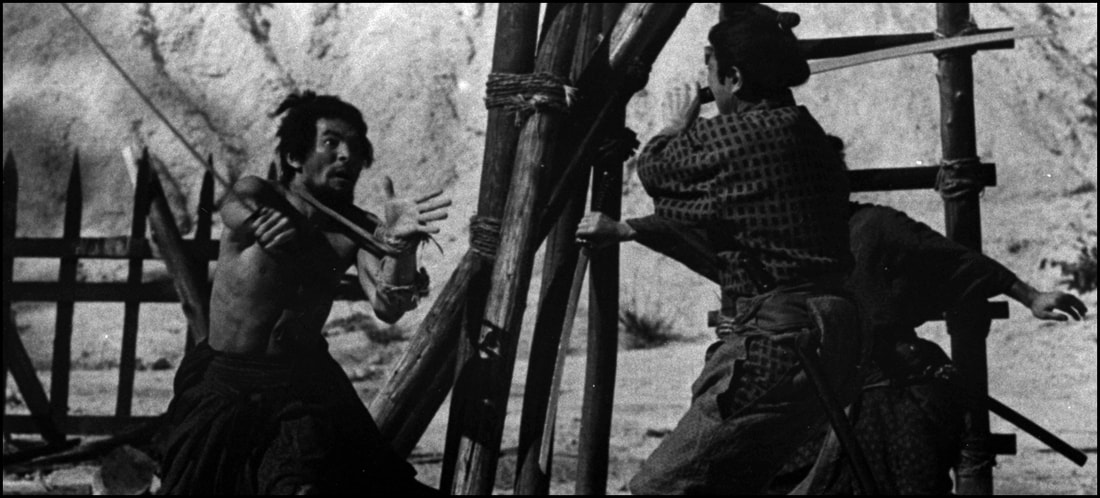
Hell Cut is a vastly more intricately involved affair than was Kiba’s first film.  Its script – credited to Gosha, Norifumi Suzuki, and Kei Tasaka – incorporates more history, and some of this suggests there may be more at work here than just the classic power struggle.  (That may not be the case, but as I’m no expert on said history, I’ll leave the observation as is.)  While it only has a few key locations, it definitely incorporates a broader cast, and – as it’s my experience that traditional samurai stories are told against a backdrop of constantly shifting alliances – this means that you have to follow it much more closely.  Such depth did require me to back up to an earlier scene – I needed to clarify who a character was that appears seemingly out of nowhere, but I was mistaken – and that’s likely what I struggled with.  What can I say?  Yours truly is human after all.
 
Still, Isao Natsuyagi elevates his acting game here as there’s much more for him to react to, and some of this even ties to giving his ronin a stronger background.  We learn about his youth and his earlier days, mostly because he meets a criminal on the way to his trial named Magobei (played by Ko Nishimura) who resembles Kiba’s father, thus making this a more personal tale than the first picture.  Nishimura definitely turns in some good marks as a swordsman who’s apparently been double-crossed by bandits he was recently partnered with, but as the picture wears on it grows increasingly difficult to understand what he’s truly wanting to accomplish here.  Yes, he’s understandably bent on revenge, but yet he stops short once once or twice from dealing a true death blow to adversaries.  In the end, I think his conflict needed a bit more obviousness and a bit less subtext.
 
Furthermore, Hell Cut delivers not one but two compelling female players to flesh out this wider conflict.  Kiba rescues the young and pretty Oteru (Rumiko Fuji) from would-be assailers in the opening, only for the samurai to quickly learn she’s not quite of her right mind.  She vacillates between being somewhat bereft to that of a frenzied state with little notice, and – before he can reach common ground – she vanishes into the hills.  Later – on the road to town – Kiba meets Oren (Yuko Kusunoki), a dastardly and deceitful woman who’ll ‘hitch her wagon’ to any man who can be as dangerous as she is.  Needless to say, these two females come into play throughout the entire running length of Hell Cut, and both either deliberately or accidentally spell trouble for our hero in ways even he couldn’t have imagined.
 
Thankfully, Gosha has pulled back on some of his stylistic tendencies displayed in the first film.  The bulk of this project is a bit more routine, with the slow-motion and freeze frame trickery used sparingly by comparison.  While it made for a better viewing experience for this reviewer, there were still small pieces of the story that just didn’t feel as organic.  It’s still worth one’s time – at a lean 72 minutes – and has a helluva lot to offer.  It just requires a bit more focus than I expected.
 
Samurai Wolf II: Hell Cut (1967) was produced by Toei Tokyo.  DVD distribution (for this particular release) is being coordinated by the good people at Film Movement.  As for the technical specifications?  After a quick review of the Film Movement website, I’m not seeing any information regarding whether or not these were new scans of existing material, so I can’t comment on that.  I can say that the film looks and sounds fabulous from start-to-finish, though some viewers might believe that there’s a loss of audio (on occasion) due to stylistic choices director Gosha employed.  (FYI: there isn’t, and that sudden silence was part of his master plan.)
 
Lastly, if you’re looking for special features?  The disc includes a video short exploring Gosha’s career (I believe the subject interviewed is actually Gosha’s daughter), and the collection includes a 20-page booklet exploring some of the same.  While Samurai Wolf (1966) – also on the disc – comes with an audio commentary track, there’s sadly no additional materials concentrating on the sequel.  (For my take on Samurai Wolf and its commentary, you can check out my review here.)
 
Highly recommended!
 
Samurai Wolf II: Hell Cut (1967) is a meatier flick than its predecessor, largely because its plot is a bit more complex and the script actually gives Kiba a modest origins story.  (Don’t worry: it’s not all that distracting, and it has a very telling reason for doing so that incorporates into a Kiba/Magobei’s relationship.)  Still, there were parts of it that I didn’t find all that interesting, and I couldn’t say why specifically.  The performances are better in many ways, and the cast is generally fabulous with what they’ve provided.  Still, I think its lack of a central villain held it back in some ways, and – as I was never quite able to get a handle on Magobei’s motivations – a few sequences failed to resonate.  What can I say?  Sometimes this happens with foreign releases.
 
In the interests of fairness, I’m pleased to disclose that the fine folks at Film Movement provided me with a complimentary Blu-ray of Samurai Wolf 1 & 2 by request for the expressed purposes of completing this review.  Their contribution to me in no way, shape, or form influenced my opinion of it.

​-- EZ
0 Comments

Stardate 05.19.2023.B: Happy Anniversary - Steven Spielberg Proved The Bloom Was Off The Rose With 1997's 'The Lost World: Jurassic Park'

5/19/2023

0 Comments

 
Picture
Yes, yes, and yes: folks, I know -- all too well -- just how cynical I can sometimes be.

Honestly, it's been an issue for me my entire life, so I can assure all of you that I'm definitely aware of it.  While I could go into a 1,000 word essay about the circumstances of my youth and the resulted upbringing, I just try each and every day to find something good to say about not only myself but also the world around me ... and -- as you know -- most of that includes my sounding off on film, television, and more.  These forms of arts speak to me in ways that I like to write about, and -- if nothing else -- penning a reflection about a certain project -- be it good, bad, or ugly -- is my own form of therapy that helps to keep me sane in these troubled times that we call life.

But, yes, I definitely know cynical when I see it, and 1997's horribly tepid The Lost World: Jurassic Park finally had me losing faith in Steven Spielberg as a storyteller.

Essentially -- and feel free to disagree with me as so many of you do -- I saw the film as little more than a tired theatrical rehash of the first picture's vastly better moments.  Gone was the emphasis on true thrills and chills owed to actually caring about central characters, and -- as best as I can tell you was intended in its place -- was the usual Hollywood messaging about how science can be bad, especially when it's attached to pure exploitation.  Well, the same could be said for this tripe: capitalism -- when executed with bringing little to nothing new to the table -- is equally nefarious.

​That's how this second foray into Jurassic Park mythology felt: a cash grab.

Hey, hey, hey!  Don't get distracted now!  I'm not saying it wasn't a complete and utter waste of time.  All I am trying to convey here is that the first picture clearly had a purpose and a beating heart.  As a franchise, I think Jurassic has always had some mighty prehistoric legs to begin with; and that's been proven over the years with revisits to this realm of Fantasy.  But when all of that magic is stripped away and you're left with just one sequence after another that resembles nothing more than -- say -- Friday The 13th with dinosaurs, then what's the real attraction?  The Lost World felt like a commercial blunder whose sole attempt was box office receipts when it should've been yet one more examination of science-gone-awry and mankind paying the consequences for its hubris.  (Yes, we did learn that in the first one, but what else is there to say about science-gone-awry?)

And because it felt derivative ... because it felt lazy ... because it felt at times even campy and uninspired ... I cannot put the blame at the feet of anyone but Steven Spielberg.  He was the grand marshal to this whole affair, and I expected him of all people to know better before going back to the well so quickly.
​
Picture
Picture
Picture
Picture
Picture
Over the years, it's been well documented -- especially by folks far more learned than I am -- about how George Lucas's original Star Wars began a trend in Hollywood that still endures to this day: when studio executives see a box office success, they set about trying to imitate it mercilessly.  What A New Hope launched was a never-ending stream of sometimes vastly inferior stories all made up and packaged to minimally look like it was Star-Wars-like; and this was done solely to exploit what Han, Luke, and Leia earned so well.  Yes, yes, yes: there may've been a minor gem in there, but more often than not these films were clearly inferior, never attempting to match the Lucas but instead separate you from your wallet.

That's ultimately how The Lost World: Jurassic Park made me feel.  It was merely an attempt to earn sold solid green on the back of what had come before.  Spielberg's involvement in such a commercial venture felt cheap, and I'll likely never forgive him for this one.

As always, thanks for reading ... and live long and prosper!

-- EZ
​
0 Comments

Stardate 05.19.2023.A: Happy Anniversary - 1983's 'WarGames' Mixed Messages With Moviemaking In A Positive Way

5/19/2023

0 Comments

 
Picture
Regular readers of SciFiHistory.Net know that I have a low tolerance for movies that mix politics with their messaging.

Look: it's not that I abhor politics because anyone who follows me on Twitter or deep inside SciFiHistory.Net's many, many, many pages and posts, it's true that I'm probably as political as the next person.  Each of us has something -- a cause, a belief, a position -- that we like to sound off on every now and then.  I think that's part-and-parcel of just being a human being: we like to discuss things, and sometimes those things can lead to controversies.  My point is that in my time watching films I've seen far too many actors, actresses, directors, and screenwriters try to monopolize their screen time with unnecessary messaging.  When that messaging either gets in the way of a good story or causes the flick to have lessened focus, then it's poorly done.  If these folks are serious about their commitment to whatever that issue is, then I think they'd be better off sticking in the realm of the traditional documentary.  Use that format to go off and expose whatever abuses need the light of day shone on them, but please please please keep social messaging to a minimum.

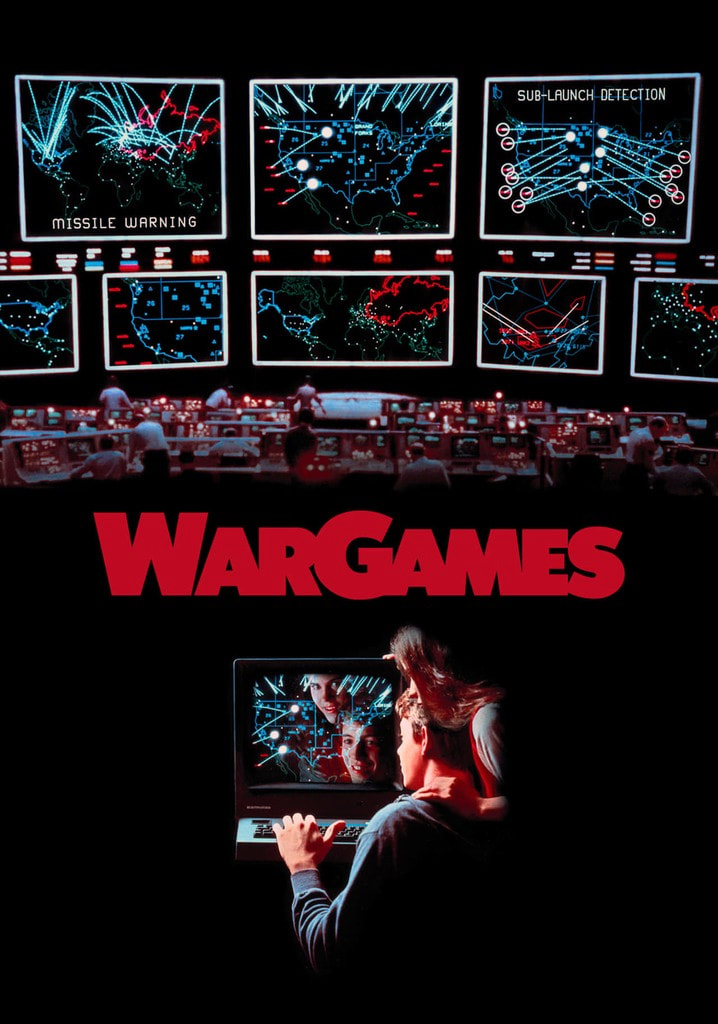
Still, there are times when I think a director and a screenwriter and the talent achieve a respectable balance.  In these rare cases, they do -- in fact -- come together around a premise and present it in such a way that the central principle is both understandable and relatable.  Again, don't get me wrong, but there are some things that happen in this wide, wide world that truly are so far away from you and I that it just can't fathom why anyone would think it requires my particular attention.  If you're passionate about it, Mr. Actor, then quit your job and spend what remains of your days fighting for it.  Isn't that what Mr. Actor would tell you and I to do were something important to us?  But -- as I said -- I think blending sentiments with sentimentality can be done ... especially when it's as seamless as it was in John Badham's Cold War thriller WarGames (1983).

​The election of Ronald Reagan had raised fears to all new heights in the early 1980's as our cultural betters were damn sure convinced the actor-turned-politician was going to end life as we know it by ushering in a full-blown nuclear war with the United States and Russia.  You couldn't turn on the television -- you couldn't pick up a newspaper and/or a magazine -- without one or more of those pundits preaching about how Reagan's ascendacy to one of the highest offices in the world could only spell D-O-O-M to those who knew just how and when to read the tea leaves.  Sitting here at my P.C. and writing this column decades later, it's very clear just how wrong they were, but back then nuclear annihilation -- predicated on global thermonuclear war -- was all the rage, and progressives couldn't stop warning us of it.

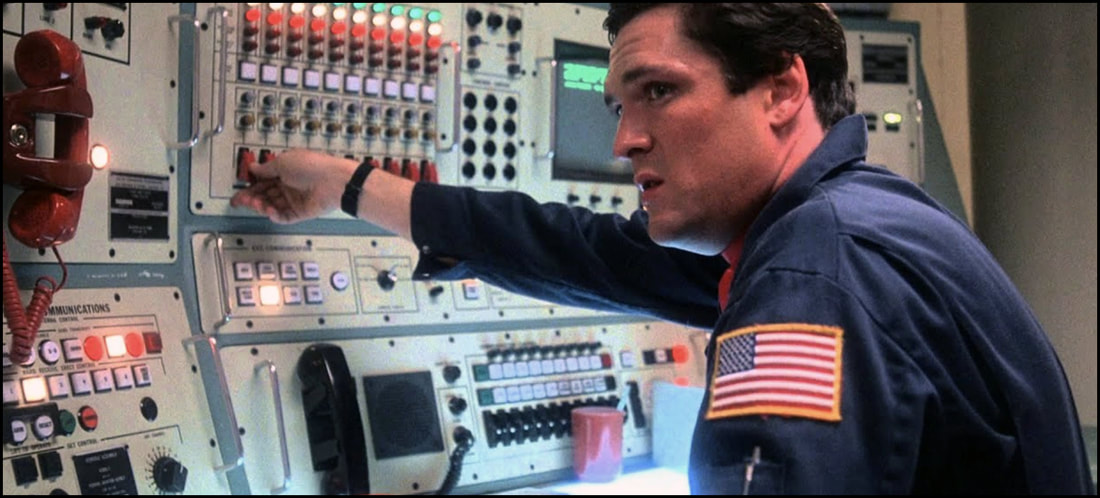
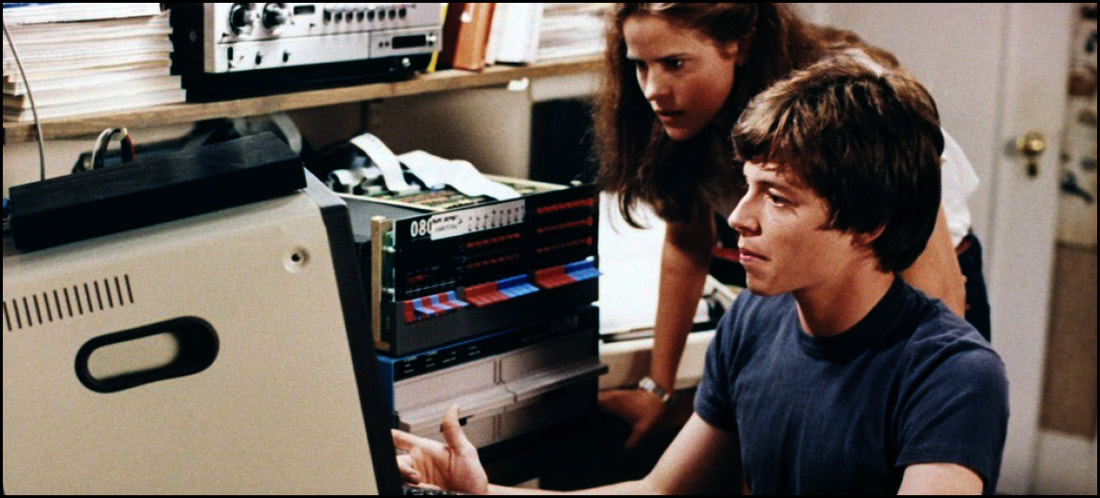
​Because Hollywood "cares," mind you, these elites ushering in a plethora of projects that were intended to show the voting U.S. public just what curse they had unleashed on all of mankind.  While most of these wares were dismissed because -- quite frankly -- they were crafted with too much alarmist circumstances and rhetoric, there are a small handful of motion pictures that were very good.  And -- for the record -- I say that they were "very good" because they didn't let their message overwhelm the emotional crux of just telling a good story.  That's what WarGames did uniquely well, and I've always thought much of this is owed to director John Badham's participation in the production.  As a director, he'd always dealt -- in my mind -- with characters first; and this meant that there was a humanity always running beneath the main plotline of WarGames that other pictures just never had.
​
Picture
Picture
Picture
Picture
Picture
Ultimately, I don't think audiences are opposed to stories that involve or invoke politics or political messages.  As I said above, I think we all like to talk about these things.  I think many of us like to be educated about the world outside and around us, and -- always trying to be good stewards -- we take the news of the day with the requisite seriousness that we believe it deserves.  Storytellers might push a bit too hard at times -- beating that drum might be their only real interest in life -- and it's on these occasions that folks tend to 'check out,' as it were.  We don't like to be told what to do.  None of us.  When that line is crossed, we're less likely to come away from a picture with an appreciable understanding of the issues and far more likely to dismiss it.

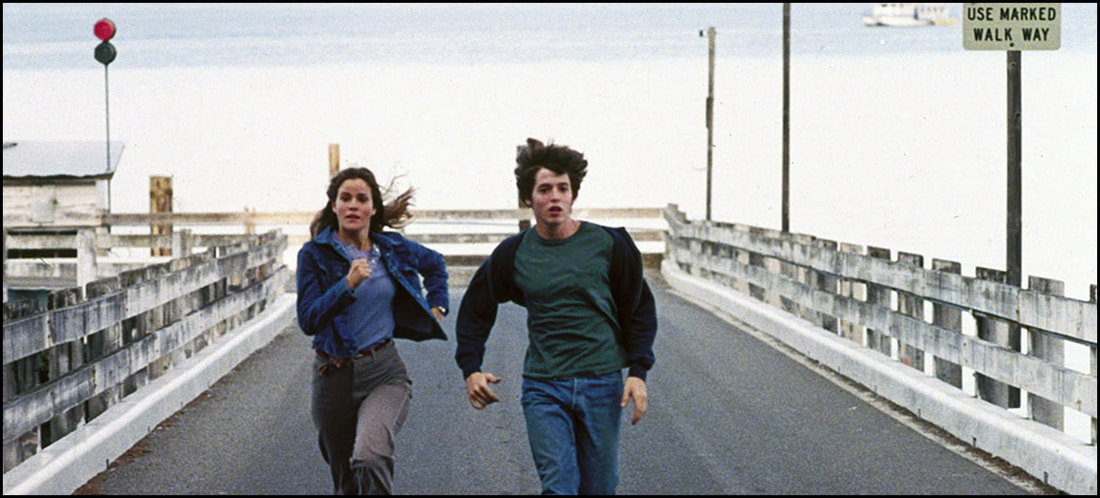
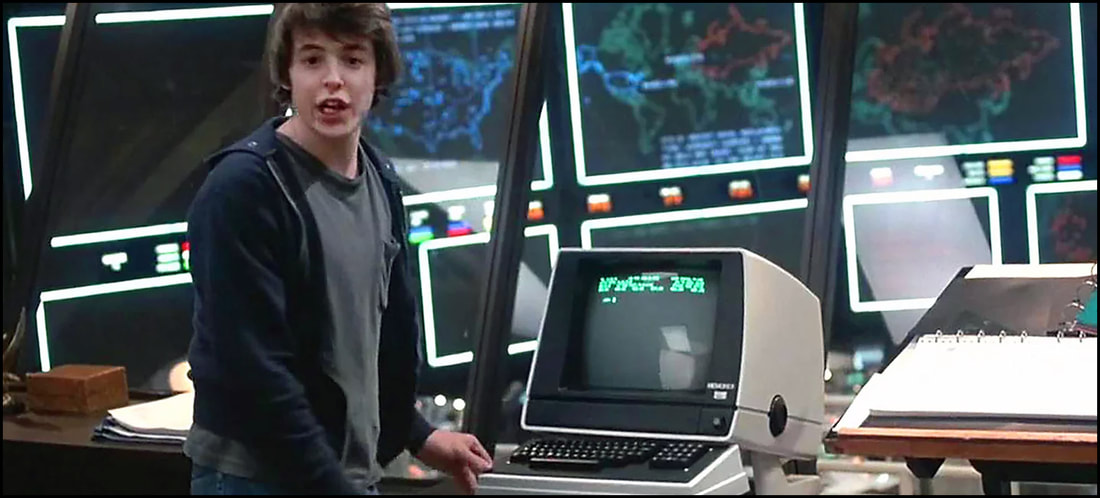
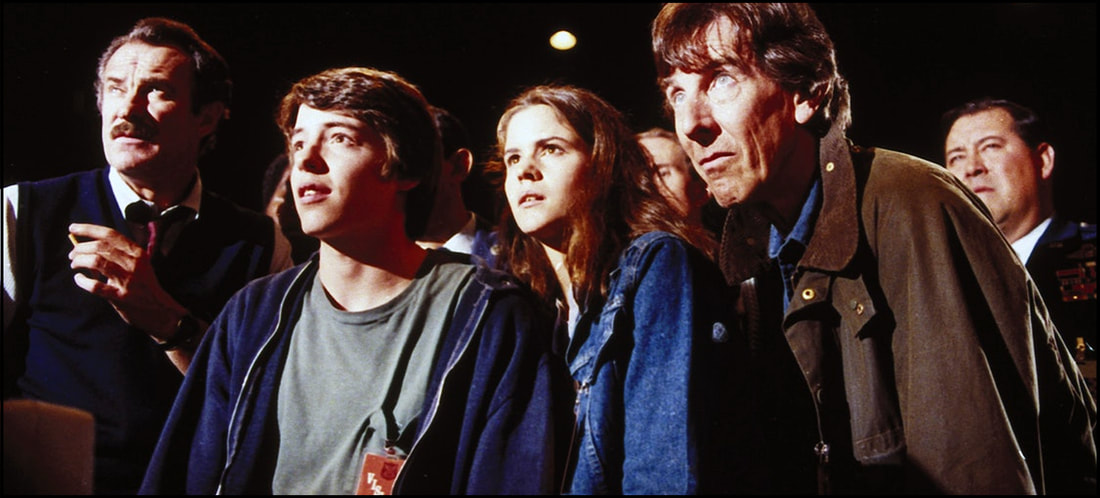
WarGames -- for all its posturing -- straddled that fine line quite nicely.  I'd even argue that -- as Cold War thrillers go -- it's arguably one of the most relatable because we'd like to see a little bit of ourselves in its central heroes.  We're all wide-eyed about saving the planet -- as Matthew Broderick's character David does in the last reel -- and maybe contemporary screenwriters would do well to revisit this classic to learn a few lessons about their craft ... and how to do it respectfully.

As always, thanks for reading ... and live long and prosper!

-- EZ
​
0 Comments

Stardate 05.18.2023.A: Crossed Swords - 1966's 'Samurai Wolf' Rises Honorably To The Occasion

5/18/2023

0 Comments

 
Picture
I was a late bloomer to the goodness of the classic samurai picture.
 
As I’ve mentioned before, I grew up in a small town essentially in the middle of nowhere.  Things like foreign films didn’t exist.  There were no arthouse theaters in my one-horse town.  Likewise, the small private college I attended really didn’t do much to change that aspect of my reality; while the Speech and Theater program did have some film classes, the bulk of that curriculum was centered around American-made classics, so I just had so little exposure to these films.  Granted, I did start to find more titles in the late 1980’s and early 1990’s: a brief career in video retail swung open this door slowly, and I was glad to finally have access to an increasingly global library of content to inspire my film likes and dislikes.
 
So much has been written over the years suggesting how much the quintessential American Western owes to the Japanese samurai film and vice versa, so I don’t feel the need to explore that further.  Suffice it to say, these two genres have so much in common that some might even find it difficult to tell them apart.  The bottom line – so far as I’ve ever considered it – is that each has something to offer the other, and talented storytellers on both sides of the ocean have maximized crossover appeal to benefit of the audience.
 
Today’s treat – Hideo Gosha’s Samurai Wolf – is a picture I’ve long been aware of but unable to locate a suitable copy of for viewing and review purposes.  So a hearty thanks goes out to Film Movement for continuing to bridge the cultural gap and deliver some of the lesser known productions to life again, especially on home video (as opposed to streaming). Don’t get me wrong: I’m all-in on streaming when I can, but – being as old school as I am – I still prefer physical media as it gives me greater opportunity to spend time with a gem like this.
 
And, yes, it is a gem.
 
(NOTE: The following review will contain minor spoilers necessary solely for the discussion of plot and/or characters.  If you’re the type of reader who prefers a review entirely spoiler-free, then I’d encourage you to skip down to the last few paragraphs for the final assessment.  If, however, you’re accepting of a few modest hints at ‘things to come,’ then read on …)
 
From the film’s IMDB.com page citation:
“A charismatic ronin gets snared into a conflict between officials at a waystation, and gains the enmity of a group of thugs.”
 
One of the aspects I’ve always enjoyed about samurai films is that – stylistically – I’ve always seen them functioning with a great degree of minimalism so far as the central story goes.  (Mind you: I’ve been told by my cultural betters that this isn’t always the case, but – as this is my review – I can only go with what I’ve seen.)  Whatever the main premise of the flick is, it’s usually very lean; and the time-consuming substance of the picture tends to gravitate toward the shifting alliances of its many characters.
 
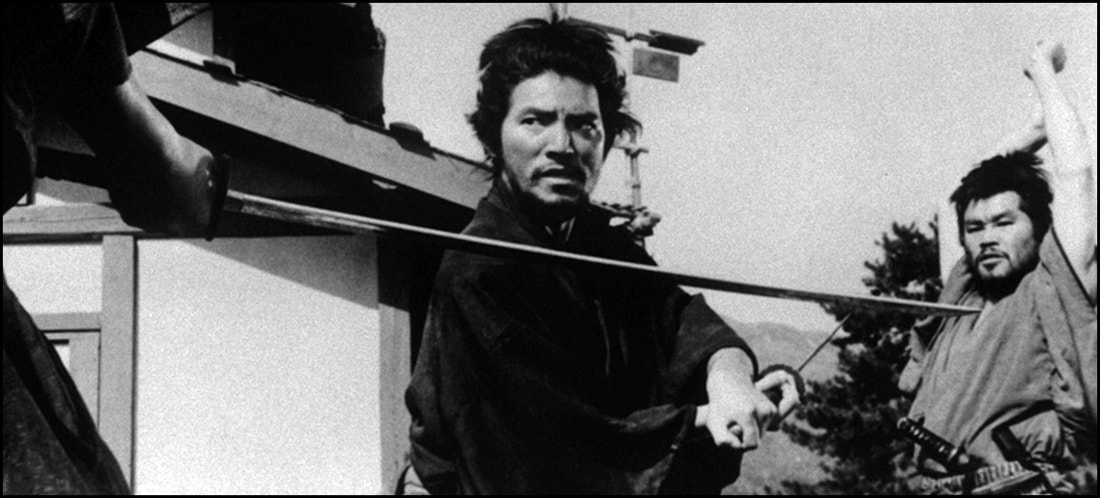
For example, in Samurai Wolf writer/director Hideo Gosha crafts an interesting yarn about the movement of 30,000 pieces of gold from one city to another.  In terms of bare bones, that is the story on the bottom line.  However, the true flavor of this visual meal is how all of these players – Ôkaminosuke aka Kiba (played wonderfully by Isao Natsuyagi), Nizaemon (Tatsuo Endô), Akizuki Sanai (Ryôhei Uchida), and others – are reasonably always in flux as it pertains to who they’re pledging their allegiance to.  These changing terms redefine relationships and reshape conflicts, always elevating the otherwise routine affair.  Intelligent viewers (or anyone watching closely) know full well that – in many, many, many samurai pictures – the hero and the villain inevitably end up allies (of a sort) at some juncture in the action.  True, they rarely finish the adventure as friends, but it’s grand for a time when even good and bad respect and abide by the warrior’s code of honor instead of sticking to their guns (erm … swords?) out of sheer convenience or contrivance.

Picture
As crafted by Gosha, Wolf takes its sweet time introducing each of the particulars but never stops tweaking what we know about the principle and players.  What never strays, however, is Kiba’s sense of duty and honor.  Understandably, he’s put at odds with Sanai – first because they’re on opposing sides and later as we learn these two men share the love of a blind woman – and he’ll stop at nothing to complete any task he undertakes, even if it means sacrificing his heart in the last regard.  She may love another.  She may even have deceived him and placed his life at great risk.  But those considerations don’t matter on the battlefield of humanity.  Adherence to a code of conduct is paramount.  It isn’t so much because this is how he’s wired: rather, it’s his unflinching commitment to his defining morality that compels him to – without question – abide by these unspoken personal and professional rules.
 
As a director, Gosha kinda/sorta experiments a bit here and there in Wolf with some curious techniques.  An awful lot is done with the accompanying soundtrack – musical and otherwise), and the picture is sprinkled with moments of silence and even a (say it isn’t so!) short sequence of slow motion here and there.  I suppose that film students might have a bit more reflection on that sort of trickery than I do.  My position is that I’m not certain some of it really accomplished anything reverential where it’s applied here; in fact, the occasional loss of audio comes across more like a production flaw (in one case, specifically), and – were I a gambling man – I wonder whether or not Gosha would’ve excised these with greater wisdom learned as an auteur later in his career.
 
When style trumps substance, I – as a viewer – always find it intrusive.  It pulls me out of the experience of watching a film, reminding me that it’s just a movie and – at this point – I begin contemplating what the storyteller was trying to say.  For a brief moment, I stop actively watching and start thinking, and this effect kinda/sorta spoils the mood.  It definitely interrupts the flow.    Though I’ve no doubt such techniques might find license elsewhere, they just felt more like a distraction here than I would’ve liked.
 
In the end, I can forgive any director a few sins, especially when the entertainment is as solid as Wolf is.  Gosha’s picture is a lean masterpiece, one that should tickle the delight of samurai fans everywhere.
 
Samurai Wolf (1966) was produced by Toei Tokyo.  DVD distribution (for this particular release) is being coordinated by the good people at Film Movement.  As for the technical specifications?  After a quick review of the Film Movement website, I’m not seeing any information regarding whether or not these were new scans of existing material, so I can’t comment on that.  I can say that the film looks and sounds fabulous from start-to-finish, though some viewers might believe that there’s a loss of audio (on occasion) due to stylistic choices director Gosha employed.  (FYI: there isn’t, and that sudden silence was part of his master plan.)
 
Lastly, if you’re looking for special features?  The disc includes a video short exploring Gosha’s carrer, and the collection includes a 20-page booklet exploring some of the same.  Samurai Wolf comes with an audio commentary track from Chris Poggiali, and – as commentaries go – I’d have to rate it as fair-to-middling.  Typically, what I look for is information pertaining specifically to this production, and the track is reasonably light on that.  There is a wealth of info regarding the stars, release dates, and some cultural tidbits; I just didn’t feel I learned enough about this flick, and that was a tad disappointing.
 
Highest recommendation possible!
 
Samurai Wolf (1966) is a warrior’s delight, and the flick offers damn near everything and anything a viewer could want from a samurai picture.  Its story is compact, allowing for its characters to bend and shape as they will, switching from hero to villain – from lover to betrayed – at the drop of a hat or the subtle change in circumstance.  Natsuyagi is particularly impressive as his Kiba doesn’t give things like money, credit, and reputation much thought, instead allowing his actions to speak for themselves once swords are crossed.  Scruffy yet fiercely independent, he’s the kind of ronin whose reputation precedes him … and God help the man or woman who stands in his way.
 
In the interests of fairness, I’m pleased to disclose that the fine folks at Film Movement provided me with a complimentary Blu-ray of Samurai Wolf 1 & 2 by request for the expressed purposes of completing this review.  Their contribution to me in no way, shape, or form influenced my opinion of it. 

-- EZ
0 Comments

Stardate 05.17.2023.A: Nightmarish Intensity Stretched To The Breaking Point In 2023's 'Malum'

5/17/2023

0 Comments

 
Picture
There’s a wonderful idiom that storytellers love to exploit from time-to-time, and it goes a little something like this: “The sins of the father will be visited upon the children …”
 
Without reading too much into it, the intrinsic meaning is that either by genetics or through circumstance anything poorly done in life by one’s parents is more than likely going to resurface at some point in the sons and daughters.  Though the passage might have Biblical connotations as well, I’ve always thought that it really only implies that a bloodline might get more than a single chance to accomplish some feat; barring any substandard performance, then the hope would be that the second time would prove fruitful.  Whether or not this signifies that that the elder will find the same redemption and/or salvation from the deeds of his descendants is unclear but mark my words: curses do seem to travel along the strands of DNA, and that’s most of what I take away from my single viewing of Malum (2023).
 
From what I’ve come to know, the picture is actually a bit of a creative do-over for writer/director Anthony DiBlasi.  Apparently, his Night Shift (2014) – which I haven’t seen – stuck with him so fervently over the years that he opted to revisit it here, and I can only guess that it’s been expanded and/or deepened for audiences.  A review of his IMDB.com profile suggests that he took a short break from the business of filmmaking, and perhaps – in that interim – that original flick kept him awake at night, so much so that he opted to once and for all put that ghost to bed with an all-new exploration.
 
Perhaps he should’ve waited a bit longer?
 
I don’t mean that to sound as snarky as it might, because there’s a lot to love about Malum.  Functionally, it’s a fairly tightly woven script that presents from clever chills and spills with what I’d say is ‘just enough’ substance to make it all come together.  For me, the problem lies in the presentation, and I’ll be happy to peel back that layer after the brief disclaimer.
 
(NOTE: The following review will contain minor spoilers necessary solely for the discussion of plot and/or characters.  If you’re the type of reader who prefers a review entirely spoiler-free, then I’d encourage you to skip down to the last few paragraphs for the final assessment.  If, however, you’re accepting of a few modest hints at ‘things to come,’ then read on …)
​
Picture
From the film’s IMDB.com page citation:
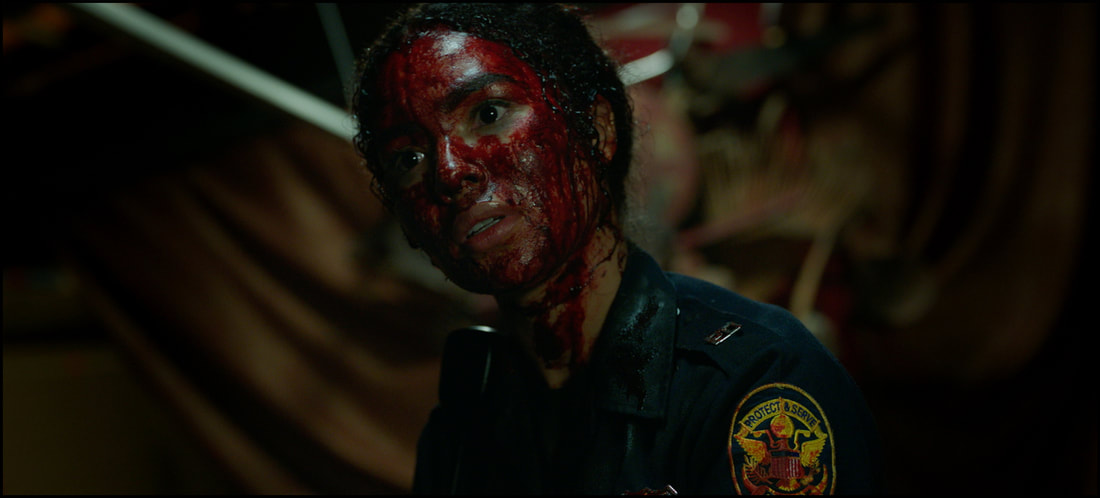
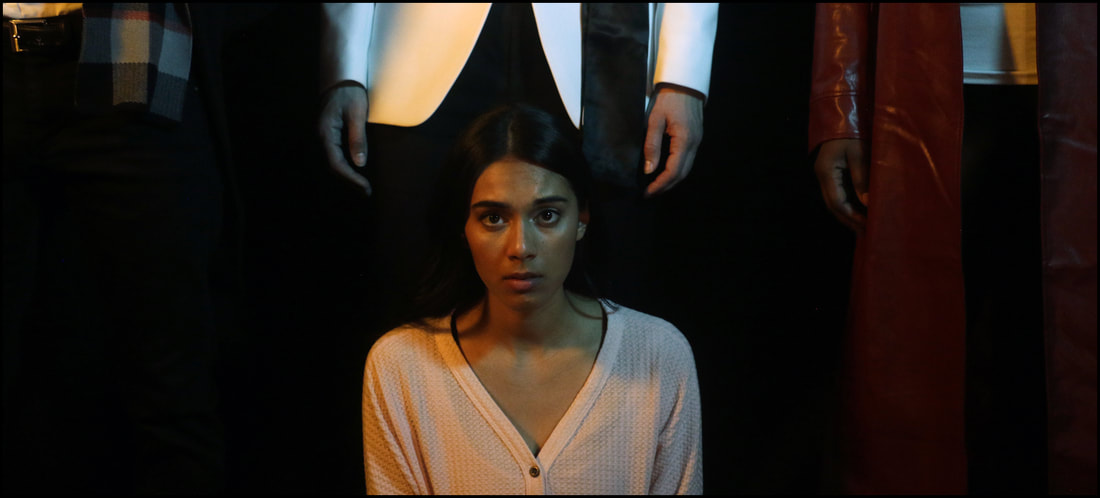
“A rookie police officer willingly takes the last shift at a newly decommissioned police station in an attempt to uncover the mysterious connection between her father’s death and a vicious cult.”
 
Officer Jessica Loren (played by Jessica Sula) wanted to follow in the steps of her father – fallen police captain Will Loren – so much so that she requested her first night on the job to ‘man the phones’ at the decommissioned station wherein dear ol’ dad took his life exactly one year ago.  Now, just exactly why a precinct would keep a defunct and decommissioned location staffed with a single officer might not make much sense – especially given the amount of bedlam this particular city of Lanford seems to be stricken with on this specific night – but if you buy into that narrative set-up, you’re off and running.  If you don’t – if it seems like so perfect a scenario that you could only be in a movie script – then your world view is likely as tarnished as is mine.
 
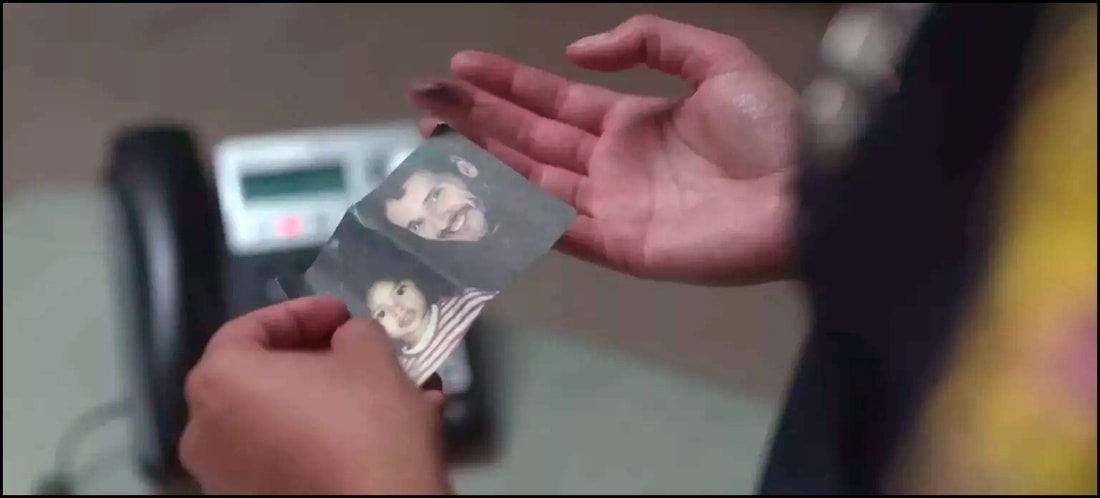
Setting aside the glaring obviousness of the set-up is actually accomplished very easily as Loren goes about the business of doing – ahem – very little actually resembling police work.  For a time, she roams these quiet hallways, stopping only when a noise here or there prompts her to investigate; and – propelled by the drive to understand exactly what went wrong with her father – she begins looking for clues that might help resolve the mystery of her life.  Lo and behold, she does uncover a small cache of evidence left behind beneath the base of her dad’s locker, and – before you know it – she’s off to the races trying to put together an increasingly bloody puzzle that just might spell her own doom.
 
To be fair, there are a few other occurrences that take place on her shift, but what matters here is Jessica’s quest.  While these happenings might ultimately tie into the whole affair – ever heard of being at the wrong place at the wrong time? – they’re little more than camera fodder for a film centered on as much psychological suspicion as it is good old-fashioned bloodletting.  Suffice it to say, that phantom spirit that pushed her old man to the brink of madness is still very much at work in Lanford, and if the young lady isn’t careful, why, she’s likely to be smitten with the same psychosis!
 
Or is she?
 
The chief problem I have with all of Malum is that – if you’re watching closely – it gets introduced very early on that this old house is infected with a mold.  Yes – since this is the movies, after all – this is not just any mold, but it’s one that – if you’re exposed to it – causes hallucinations.  If you’re like me, then once that factor gets so heavily established it becomes nearly impossible to separate reality from fantasy … and let’s just say that, clearly, the bulk of what remains of Jessica’s first and only work shift is plagued with far too many ‘did this happen or not’ moments.  Once the storyteller certifies that you have a untrustworthy narrator, audiences can rest assured that the house of cards most decidedly will be falling apart before all is said and done.
​
Picture
Had this affliction been withheld until much later in the film, then I might have been able to go with the flow a bit more easily than I did in this sitting.  I say this because DiBlasi and his cast and crew went to some fabulous lengths to make this haunted house work, and – on a purely visceral level – they achieve some truly great scenes and sequences.  Sula is an actress who knows how to hit her marks; while the supporting cast is fairly thin, they all still perform at a level of peak efficiency to deliver exactly what’s needed, when it’s needed, and in the proper supply to produce the required impact.  But when you know from the film’s get-go that the point-of-view has been purposefully skewed – and you’re presented with scenes that don’t quite follow narrative logic – it grows increasingly challenging to ‘sell the sizzle’ for ninety minutes.
 
None of this takes away from what Malum does well, and – as a carnival-style attraction that’s meant to make you jump – it’s vastly smarter than your average bear.  The technical proficiency involving the camera work, the performances, and the special effects warrants a good amount of respect, especially given the fact that so very much of this feels like a small budget and/or independent production.  In fact, those elements alone kept me watching and interested in Jessica’s personal journey.  I just wish her rationality hadn’t been so obviously in question from so early in the picture.
 
Malum (2023) was produced by Welcome Villain.  According to the press materials I have been provided, Malum is presently available for streaming purchase (effective 05/16/2023) on such platforms as iTunes, Amazon Video, VUDU, and Google Play.  As for the technical specifications?  Nothing short of ‘wow.’  The film looks and sounds incredible from start-to-finish, with director DiBlasi suitably cultivating a dynamic atmosphere for all things that go bump in the night … and not only to they go bump?  They bleed extremely well, too!  The film features some excellent practical Horror effects for fans who enjoy that sort of thing, and I’m not ashamed to admit I do.  As this was a streaming presentation, there were no special features to comment upon.
 
Recommended.
 
Despite some narrative issues – as in “what’s really happening here?” – Malum is mostly a lean and efficient thriller.  Jessica Sula gives a compelling central performance, shouldering the weight of so much storytelling with relative ease.  Cinematography both inside and outside the decommissioned police precinct is quite good.  Also, I’d be a fool if I failed to mention again that the in-camera practical effects are exceedingly well-crafted, the kind of thing this reviewer wishes more Horror flicks were doing these days.  If you can look the other way with respect to the film’s somewhat pronounced shortcomings, then you’re definitely in for one of the wildest nights in this young lady’s short life.
 
In the interests of fairness, I’m pleased to disclose that the fine folks at Welcome Villain provided me with complimentary streaming access to Malum (2023) by request for the expressed purposes of completing this review.  Their contribution to me in no way, shape, or form influenced my opinion of it.

​-- EZ
0 Comments

Stardate 05.16.2023.A: Site Update - New Content May Be Light For A Few Days ...

5/16/2023

2 Comments

 
Picture
Hey there, folks, and Happy Tuesday!  (Well, Happy Tuesday for you folks, anyway ...)

Just wanted to pop in this morning with a quick update as I know that there are a few of you who do show up in this space every day looking for new content.  As an FYI, that may be light for a few days as I'm -- ugh -- back at the dentist this morning for a reasonably serious procedure.  The whole thing started about two years ago with a root canal that -- ugh ugh ugh -- was done poorly.  I had to go back to have it worked on a few times -- mostly because the original dentist didn't quite get it right the first time -- and now the whole tooth has to be extracted as the initial work just didn't take.  So, yes, yours truly is in a bit of pain, but right now it's manageable.  It likely won't be, however, once they work their dental magic this morning.

I don't know how you folks process pain, but my body has always gone into a kind of shutdown mode: I get really, really, really tired, and the only thing I can do is sleep.  So most likely I'll come back home and spend the day in bed later this A.M.  That's really best for a body anyway when it's undergoing any trauma -- big and small -- and I wanted to share that.

I might pop in for some small announcements and whatnot depending upon how well I'm recovering over the next few days to a week.  But, otherwise, it'll likely be a bit quiet in these parts on longer articles and/or reviews.

Wish me the best!

As always, thanks for reading ... and live long and prosper!

​-- EZ
2 Comments

Stardate 05.15.2023.A: 2020's Underwater - Bad Ideas Sink An Otherwise Respectable Disaster Picture

5/15/2023

0 Comments

 
Picture
(NOTE: The following review will contain minor spoilers necessary solely for the discussion of plot and/or characters.  If you’re the type of reader who prefers a review entirely spoiler-free, then I’d encourage you to skip down to the last few paragraphs for the final assessment.  If, however, you’re accepting of a few modest hints at ‘things to come,’ then read on …)
 
From the film’s IMDB.com page citation:
“A crew of oceanic researchers working for a deep-sea drilling company try to get to safety after a mysterious earthquake devastates their deepwater research and drilling facility located at the bottom of the Mariana Trench.”
 
I have a vague recollection of seeing some of the advertisements for Underwater – as well as reading a few reviews – during the Age Of Covid.  From what I can recall, the picture scored some minor praise from industry types, though I can’t imagine it churned up a whole lot of business given the circumstances of the Great Plague.  Now that I’ve had the chance to take it in via a pay cable screening of it, I’m honestly a bit surprised that it’s earned so much love from folks in online genre communities; but – then again – I’m an ‘old dog’ who’s seen a whole lot of similar pictures so maybe sorta it wasn’t quite meant for me.  Yes, it’s been done before, and it’s been done vastly better.
 
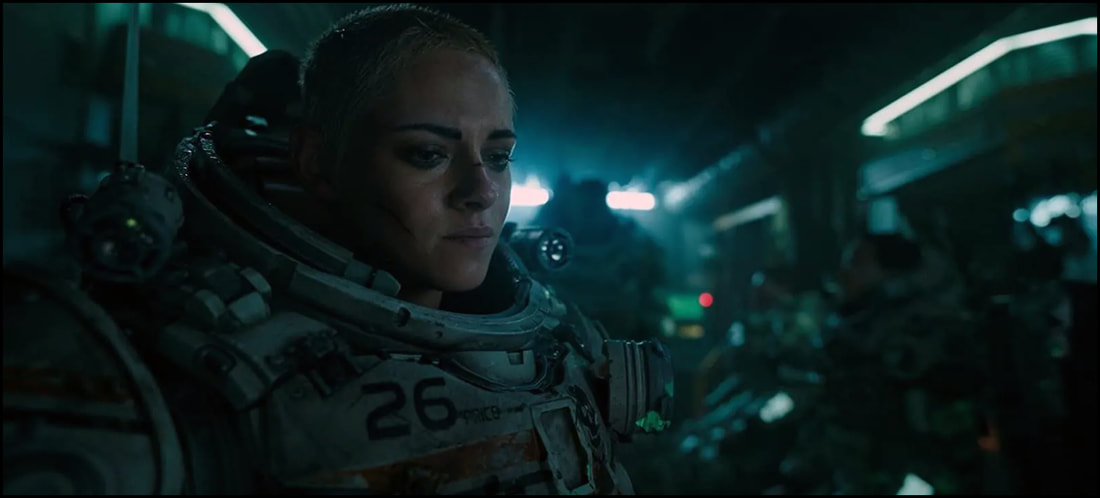
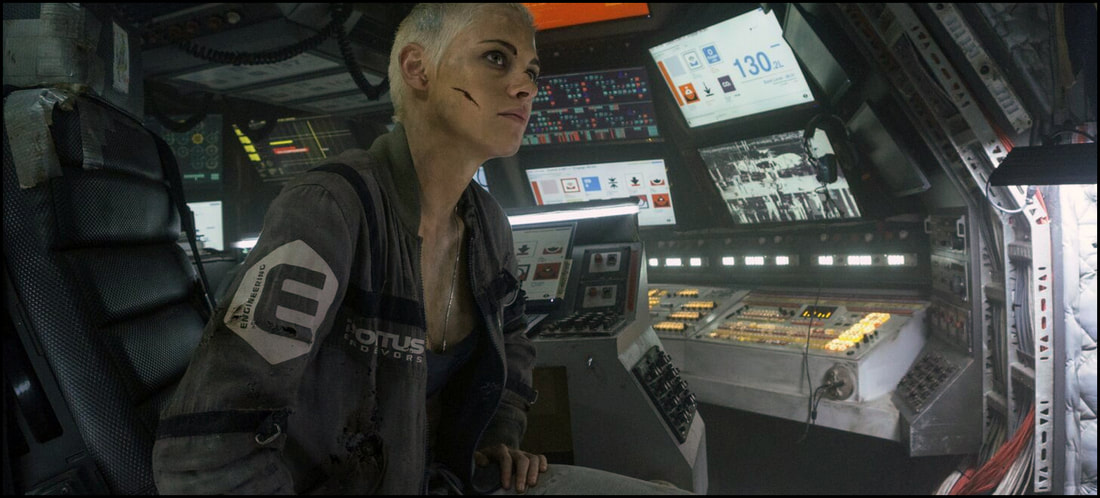
In fact, I have a suspicion that producers likely cast actress Kristen Stewart as the project’s unconvincing lead in hopes that her appeal with younger audiences – stemming from her tenure in the Twilight franchise – might have specifically translated into bigger box office receipts.  There’s absolutely nothing wrong with that, and – to a certain degree – that very may be the project’s sole saving grace as so much in here is pretty forgettable.  Stewart certainly does what she can with this heavily water-logged production, though not even her street cred can bring this sinker to the surface for more than a single viewing.
 
The script is credited to Brian Duffield and Adam Cozad.
 
While I was one of the few I know of who enjoyed Cozad’s work on The Legend Of Tarzan (2016), that property certainly suffered through poor-to-middling reviews and failed to deliver on its blockbuster potential.  Duffield – on the other hand – is a name I recognized: a quick review of his IMDB.com profile shows him attached to two other flicks that arguably enjoyed more positive buzz.  Spontaneous (2020) and Love And Monsters (2020) had many more sparks of life than did Underwater, and – dare I say? – they even had their respective bits of freshness to genre ideas that had been tinkered with before.  But, alas, Duffield brought no significant energy to this deepwater thriller, instead piling on trope after trope – cliché after cliché – in a never-ending assault on the audience’s senses.
 
Essentially, Underwater is textually similar to Ridley Scott’s Alien (1979) along with affectionate nods to such other similarly set oceanic adventures like The Abyss (1989), Leviathan (1989), and DeepStar Six (1989).  However, IMDB.com’s synopsis for Underwater even fails to mention that there’s a monster in this picture – let me assure you that there is one, and it’s a doozy – so perhaps the marketing for this whole affair failed to make that connection upon its original release?  Rather than depict a straight story of a trapped crew’s attempts to survive, this one creates a whole new species in the deep, though there’s really little to no information about where they may’ve come from and/or whether they’re somehow tied to these deep-drilling efforts.  In fact, this script really gives viewers little to rely on.  It’s a shame they couldn’t spare so much as a theory here or there.
 
Unlike the other films Underwater kinda/sorta copies, this crew is given perhaps the thinnest backstories of record.  We’re given – quite plainly – no time to get to know them whatsoever as the cataclysmic event that puts them on the run takes place only moments after the opening credits have rolled.  All of a sudden, it’s one explosion after another – one structural collapse piled on something similar – and they’re high-tailing it from one deep sea installation to the next.  Stewart occasionally looks tired – a big no-no when you’re the lead – and the best co-star T.J. Miller can do is try to recreate the snarky panic most noticeably owed to a young Bill Paxton in James Cameron’s Aliens (1986).  Must everything be derivative these days?
​
Picture
Still, kudos are given to Director William Eubank.  He definitely kept the film moving at a mostly breakneck pace after that first explosion, but as we’re never properly introduced to the individuals there’s no emotional attachment whatsoever … and no compunction to care about the successive deaths, heroic or otherwise.  To a certain degree, it’s a disaster film, so one expects a fair body count.  But in smarter fare we’re at least given a reason to like or dislike the players, and that’s not the case here.  Little time was expended on character traits.  Instead, they’re all just victims – one after another – in the visual cacophony that’s occasionally even harder to discern (because of the murky depths, you know).
 
Now, I don’t normally do this as I’ve given you a spoiler warning above but for those of you who truly DO NOT WISH TO HAVE THE PLOT SPOILED, this is your last notice as what I discuss next is rather significant.
 
So … you’ve been suitably warned.
 
Here it is:
 
When it comes to telling any story, I’ve always believed that writers need to be as free from rules as is humanly (and humanely) possible.  Storytellers really need to be free to use whatever tools they have at their disposal whenever and however they like, but – even then – the medium of film does have some requirements – some cardinal sins – that should never be broken unless you have some incredible stylistic reason.
 
For example, one-time auteur Emilio Estevez actually kinda/sorta tanked a somewhat promising career as a writer/director – believe it or not.  In 1986, he largely brought that potential to a screeching halt with the release of his film Wisdom.  In it, he played John Wisdom, a modern-day Robin Hood who turns to a life of crime in order to help ailing farmers across the fruited plains.  I won’t go into any major discussion of the plot, mostly because that doesn’t matter here, but I will say Estevez penned his script with Wisdom serving as the narrator for the audience.  Structurally, that’s all well and good … but even after the character dies in the conclusion Wisdom is shown very much alive – on screen – narrating his death for the audience.  Needless to say, critics were flummoxed.  Erm … aren’t you dead?  If so, then how can you be here, telling us this story?  It caused a huge narrative break, and the picture – along with Estevez’s career – suffered the fallout.
 
Sadly, Duffield and Cozad have done the same in Underwater.
 
The picture is narrated from start to finish by Stewart’s character.  Even though we see her demise in the closing moments, there she is – the omniscient and omnipotent narrator – still detailing for us who she is, what she did, and what her fate would be.  It’s more than a bit silly, and – frankly – it sank whatever good will the flick likely earned with its frenetic pacing and excellent production work.
 
Bad choice, boys.  And – even worse?  It could’ve been fixed in post.
 
Underwater (2020) was produced by Chernin Entertainment, TSG Entertainment, and 20th Century Fox.
 
(Mildly) Recommended.
 
Functionally, there’s not a lot wrong with Underwater (2020).  It’s a reasonably well-made monster movie with solid effects work, fabulous production details, and an impressive cast, all set in a workable race-against-time to save themselves from multiple scenarios before the big finish.  However, we’ve seen the formula for Underwater done many, many, many times before – with much better results – leaving me kinda/sorta tired with its paint-by-number characters, supremely predictable plot turns, and – ahem – watered-down premise.

​-- EZ
0 Comments

Stardate 05.12.2023.B: The Gods Must Be Crazy - A Review Of 2023's 'Exceptional Beings'

5/12/2023

0 Comments

 
Picture
(NOTE: The following review will contain minor spoilers necessary solely for the discussion of plot and/or characters.  If you’re the type of reader who prefers a review entirely spoiler-free, then I’d encourage you to skip down to the last few paragraphs for the final assessment.  If, however, you’re accepting of a few modest hints at ‘things to come,’ then read on …)
 
From the film’s IMDB.com page citation:
“Two Supernatural Beings begin to question their Godhood, when they encounter a human being, an ordinary woman with an uncanny essence, who doesn’t conform to their thousands of years of knowledge about humanity.  They journey through her existence, as it relates to their desperate need to understand answers to questions, they never believed existed.”
 
I once heard it said: “It’s a wonderful life … until it isn’t.”
 
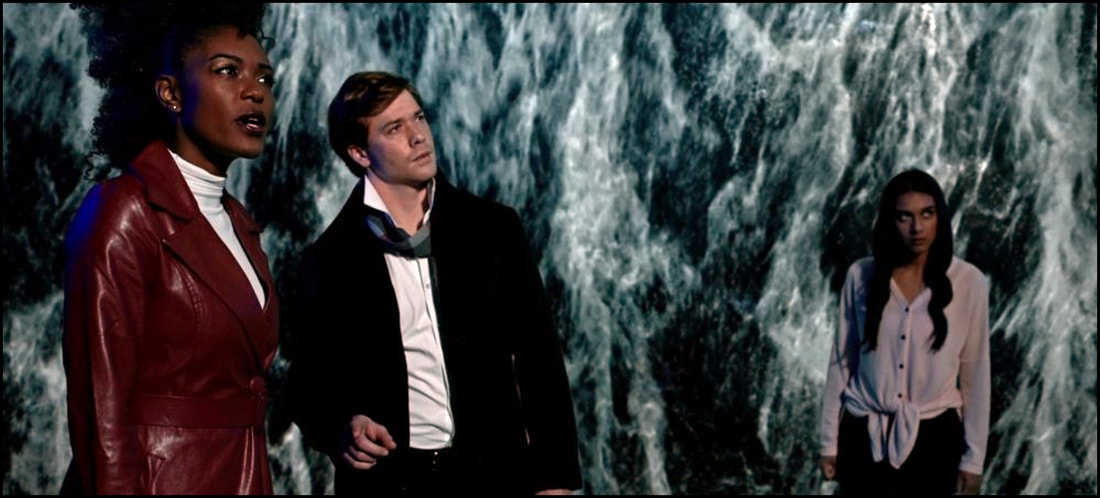
Therein lies the dilemma for the Greek gods Hermes (played by Dane Oliver) and Athena (Ciarra Carter) who are at the center of Exceptional Beings.  As we learn, they’ve gone about the business of being immortal, only turning an eye onto those pesky lower life forms better known as human beings when perchance looking for perform a bit of trickery or a batch of foul play.  But – lo and behold – what are the two to make of their experience as deities when an encounter with ‘mere mortal’ Mina Bihary (Rachel Thundat) suggests that life – as they believe they’ve known it – still has secrets they’ve yet to crack?  Aren’t they gods?  Don’t they know all there is to know?  Or could it possibly be that even gods have gods they inevitably must answer to, or was there another form of existence – something on the evolutionary scale between gods and man – that’s been long overlooked?
 
Why, so very much of what elevates the ideas for Exceptional Beings – adapted for the screen and directed (with assistance) by Njedeh Anthony – is the existential struggle like none expected.  Hermes, Athena, and Apollo are drawn into conflict again and again and again not because of the exercise of their traditional responsibilities with effect to man, the world, and the universe; instead, one of them has seen something that doesn’t balance with their conception of reality, and – sometimes together, sometimes apart – they’ll move Heaven, Hell, Earth, and anything in between to get the answers they believed to be part-and-parcel of their birthright.
 
Some might call Beings a bit too talky and light on action, but – so far as this reviewer is concerned – it’s in these on-and-off discussions of life that the film works best.  Oliver and Carter make the best of their brother/sister act, balancing out their respective love, hate, and pure disdain for one another and everything around them in the pantheon.  Oliver handles Hermes’ uptight prissiness with some accomplished contempt.  He’s the quintessential eternal whose spent the better part of infinity glaring down his nose at all things inferior (which is, like, basically all).  As Athena, Carter – in contrast – has allowed the heights she has soared to convince her that the world and its inhabitants are playthings waiting for her destructive tendencies to grind them into dust.  You and I?  Why, we’re toys in her games!  This central relationship – the brotherly and sisterly back-and-forth – gives the entire production the undercurrent it needs to sustain itself, mostly because the rest of the affair is a bit … well … lifeless.
​
Picture
Anthony’s script is curiously structured with both flashbacks and asides that sometimes feels a bit jerky.  The audience is pulled on the journey – with the gods going when and where they want – and I didn’t find the narrative as seamless as I would’ve liked.  There are even a few exchanges delivered a bit too hard to follow, causing me to question whether or not they needed to exist in this cut.  Again, some of this disconnect may be owed to the fact that time spent with Hermes and Athena apart – with the exception of scenes involving Apollo (a very good but curiously underplayed Victoria Antonelli) – just don’t have the intellectual substance I think the overall film needed.  Bihary’s performance – as the kinda/sorta ‘is she or isn’t she’ human/immortal hybrid – is good, but the story just lacks any real connective tissue between her and the audience to lift it up front-and-center.  As the picture’s A-plotline, it just isn’t as interesting as are time spent with the gods.  The end result is that viewers may not much care what Mina’s identity may or may not be until very, very, very late in the process.
 
But … isn’t that always the case?
 
From what I can remember of my days studying Greek mythology in college (and, yes, I took a few courses), it was those nefarious philandering dealings with the immortals that were always more interesting than what the average man, woman, or child was up to in the tales.  In fact, humans were little more than their curios to the exalted one – with a few exceptions – and I suspect that display of sheer galactic power is what has always drawn people to myths and continues to do so today.  In that regard, Beings definitely is a story worthy of exploration.  It might not be everyone’s cup of tea, but I dare anyone who loves good dialogue between scene-chewing heavyweights to ignore the magnetism of Oliver, Carter, and Antonelli when director Anthony lets them strut their stuff.  While it could’ve used a bit of spit polish here and there, these exchanges are still pretty darn good; and the onscreen talent seems like they were having a good time wearing the shoes of our masters.
 
Wouldn’t you?
 
So, yes, there’s a story to tell in this humble little universe, one of arrogant overlords both finding their way and cementing their place in a reality that’s long forgotten them.  Starz Network’s American Gods adaptation of Neil Gaiman’s novel of the same name covered some of the same intellectual ground, but the program’s constantly changing creative crew hamstrung it from developing any real momentum.  (Pfft.  Go and read the Gaiman book anyway.  It’s damn stellar, by the way.)  And shows like Lucifer and Dominion have always been popular in exploring the drama between good and evil, especially when the very wicked gets brought to life by so many charming and attractive villains.  Still, what emerges from Beings is a bit uneven.  It never achieves a balance between the issues heavy or light, and it fails to give a compelling reason why I should care about its damsel-in-distress Mina.  This could be because we, too, learn that not all is as it seems with the schoolteacher from California, and the reveal felt a bit too orchestrated.
 
Exceptional Beings (2023) was produced by The Gestalt Effect and FJ Morgan.  According to a Google search, the film is presently available for streaming only on such platforms as Prime Video, Apple TV, or Vudu.
 
As for the technical specifications?  The sights and sounds are very good.  While I can’t prove it, I suspect that the feature was shot digitally with some special effects added in post-production.  The quality of the effects is occasionally a bit spotty, harkening back to work done a few decades ago; as a result, they might get in the way of the experience for some viewers as they have more of a quaint foundation – and are mildly clunky – than anything else.  I’d also be remiss if I failed to mention that there was a sequence or two wherein the sound levels were a bit off as one character suddenly came through much louder than the other.  And a camera angle here and there?  It could’ve been improved.  Such can be the nature of low-budget and/or independent production, so consider yourself warned.
 
(Mildly) Recommended.
 
I’ve seen enough independent productions in my day to know that these are stories not only difficult to tell but also hard to score with audiences; and – while that might be the fate of 2023’s Exceptional Beings – I hope this Fantasy perseveres well enough to find a market.  It’s occasionally prescient.  It’s occasionally interesting.  Its players hit their marks, and there’s a lean efficiency to a meal that has more meat on it than most might see at first glance.  While I might nitpick things like pacing and point-of-view all day long, I can still see the potential in its ideas.  Here’s hoping Anthony learns what he can from this first installment and puts them to great use in the promised follow-up (teased in the after credits scene).
 
In the interests of fairness, I’m pleased to disclose that writer/director Njedeh Anthony provided me with complimentary streaming access to Exceptional Beings (2023) in agreement for a review of the production.  His contribution to me in no way, shape, or form influenced my opinion of it.

​-- EZ
0 Comments

Stardate 05.12.2023.A: Breaking News - 'Ginormo!' Aims To Satirize Japanese Television In A Big Way

5/12/2023

0 Comments

 
Picture
I know, I know, I know: I've mentioned to regular readers of SciFiHistory.Net many, many, many times before that I grew up in the somewhat rural pocket of the American Midwest where -- I kid you not -- I was lucky to have six or maybe seven or eight television channels on a good day.  I lived 'in-town' -- as they say -- and that gave me access to the big three networks in America (ABC, NBC, and CBS) but I also had WGN (out of Chicago) along with the occasional handful of other very small broadcast stations out of only God knows where.  As so many small channels back in those days did, they were part of a syndicated group that would purchase older shows and foreign imports to run as part of their daily rotation.  This is how I grew up watching programs like the United Kingdom's Thunderbirds or Japan's Johnny Sokko And His Giant Robot, The Space Giants, and a few other goofy things whose names I just don't recall.  Some were anime, but the majority of them that I watched were live action.

In any event ...

When the rest of you were getting (cough cough) some artistic and measured programming to stunt your growth, I was getting a bit of healthy schlock that wound up making me laugh half of the time but kept my interest all of it.  Much like the Godzilla and/or Gamera movies, these shows featured giant lumbering monsters that were clearly being played by men and women in horrifically padded suits; and these villains were crafted and played on the small screen in such a way to suggest that they were never really ever going to overpower the show's central warriors but instead be a bit of a nagging infestation that momentarily required some heroic intervention by the good guys.  So, yes, I call it schlock, but it was all delivered in such a good-natured and wholesome way that a child like me couldn't find any harm in any of it ... no matter if I tried.

​If you do a bit of research, then you'll find out that shows like this still exist to this day.  Though I imagine their viewership is probably quite small, theirs is a kind of programming that endures, much in the same way that Star Trek, Star Wars, and the like do ... creators have a fondness for them, so they seek to keep them alive ... even if that means lampooning them.

Fast forward to today: I recently received a notice from one of my industry insiders alerting me to a little something-something called Ginormo!  Rather than have me give you the details -- which, honestly, I'd probably mess up a wee bit here and there as I haven't watched this one yet -- I'm going to do the obligatory cut-and-paste below ... but I will pipe in to suggest that this very much resembles one of those programs of my vast and distant youth.  Basically, you get a stable of heroes who each episode have to face-off against some potential menace-to-end-all-menaces; and -- unlike those shows of old -- this one satirizes the whole affair to the delight of the audience.

Keep your eyes peeled!  If I get the chance to give this pilot episode a screening (I believe it drops on YouTube today), then I'll be all-too-happy to pen a review.
​

Picture


Ginormo! Going Big For Laughs
​

Created in the early 1970’s, Ginormo! follows the Super Protection Force (SPF) as they protect the world from the evil organization, Beast Advanced Artillery Division (BAAD), which seeks to take over the world using the most terrifying monsters ever created. Unfortunately, due to the shoe-string budget and the incompetence of the production team, the show was so badly done, it never aired.


Recently discovered by Steven He, we will be airing it for the first time as an unintentional comedy masterpiece.


From the show's IMDB.com page citation:
Ginormo is a sci-fi comedy series satirizing Japanese monster movies and TV shows of the 1960s and 1970s. Using only effects from that time period - bad rubber monster suits, spaceships on strings, miniatures and hokey scripts and dialogue - Ginormo pays homage to a period of craftsmanship before CGI came onto the scene. Presented as a lost science fiction series from 1972 that was never aired because it was so bad, Ginormo lovingly and humorously pays tribute to a by-gone era in the form of a ridiculous meta comedy that can be enjoyed by young and old alike. Created by two AAPI writer/producer/directors - Ken Mok (Joy, Invincible, America's Next Top Model) and Youtube star Steven He, Ginormo also showcases a primarily AAPI cast - a talent base that's historically been under-represented in film and television.

About Ginormo!
  • 6 episode series
  • Premieres May 12, 2023
  • New episode released each Friday on Steven He’s Youtube 
  • Episode 1: A Show So Bad It never AIRED | Ginormo! Ep.1
  • Created by Ken Mok and Steven He

​The Cast
  • Steven He as Mikko
  • Alan Chikin Chow as Lord Metagon
  • Jeenie Weenie sa Kimmie
  • Nathan Doan as Munchie
  • Kris Collins as Lady Spigh
  • Joma as Jazzypus
  • Steven Ho as Uniclop
  • Ian Boggs as Major Boba
  • Jennings Brower as Ginormo! and Hunky Guy
  • Introducing Jay Lee and Lauren Kim

​
0 Comments
<<Previous
Forward>>

    Reviews
    ​Archive
    ​

    Reviews

    Daily
    ​Trivia
    Archives
    ​

    January
    February
    March
    April
    May
    June
    July
    August
    September
    October
    November
    December

    original content
    ​

    January 2026
    December 2025
    November 2025
    October 2025
    September 2025
    August 2025
    July 2025
    June 2025
    May 2025
    April 2025
    March 2025
    February 2025
    January 2025
    December 2024
    November 2024
    October 2024
    September 2024
    August 2024
    July 2024
    June 2024
    May 2024
    April 2024
    March 2024
    February 2024
    January 2024
    December 2023
    November 2023
    October 2023
    September 2023
    August 2023
    July 2023
    June 2023
    May 2023
    April 2023
    March 2023
    February 2023
    January 2023
    December 2022
    November 2022
    October 2022
    September 2022
    August 2022
    July 2022
    June 2022
    May 2022
    April 2022
    March 2022
    February 2022
    January 2022
    December 2021
    November 2021
    October 2021
    September 2021
    August 2021
    July 2021
    June 2021
    May 2021
    April 2021
    March 2021
    February 2021
    January 2021
    December 2020
    November 2020
    October 2020
    September 2020
    August 2020
    July 2020
    June 2020
    May 2020
    April 2020
    February 2020
    January 2020
    December 2019
    November 2019
    October 2019
    September 2019
    August 2019
    July 2019
    May 2019
    March 2019
    February 2019
    January 2019
    December 2018
    November 2018
    October 2018
    September 2018
    August 2018
    June 2018
    May 2018
    March 2018
    January 2018
    December 2017
    November 2017
    October 2017
    September 2017
    August 2017
    July 2017
    June 2017
    May 2017
    April 2017
    March 2017
    February 2017
    January 2017
    December 2016
    November 2016
    October 2016
    September 2016
    August 2016
    July 2016
    June 2016
    May 2016
    October 2015
    September 2015
    August 2015
    July 2015
    June 2015
    May 2015
    March 2015
    February 2015
    January 2015
    December 2014
    November 2014
    October 2014
    September 2014
    August 2014
    July 2014
    June 2014

    RSS Feed

Proudly powered by Weebly